
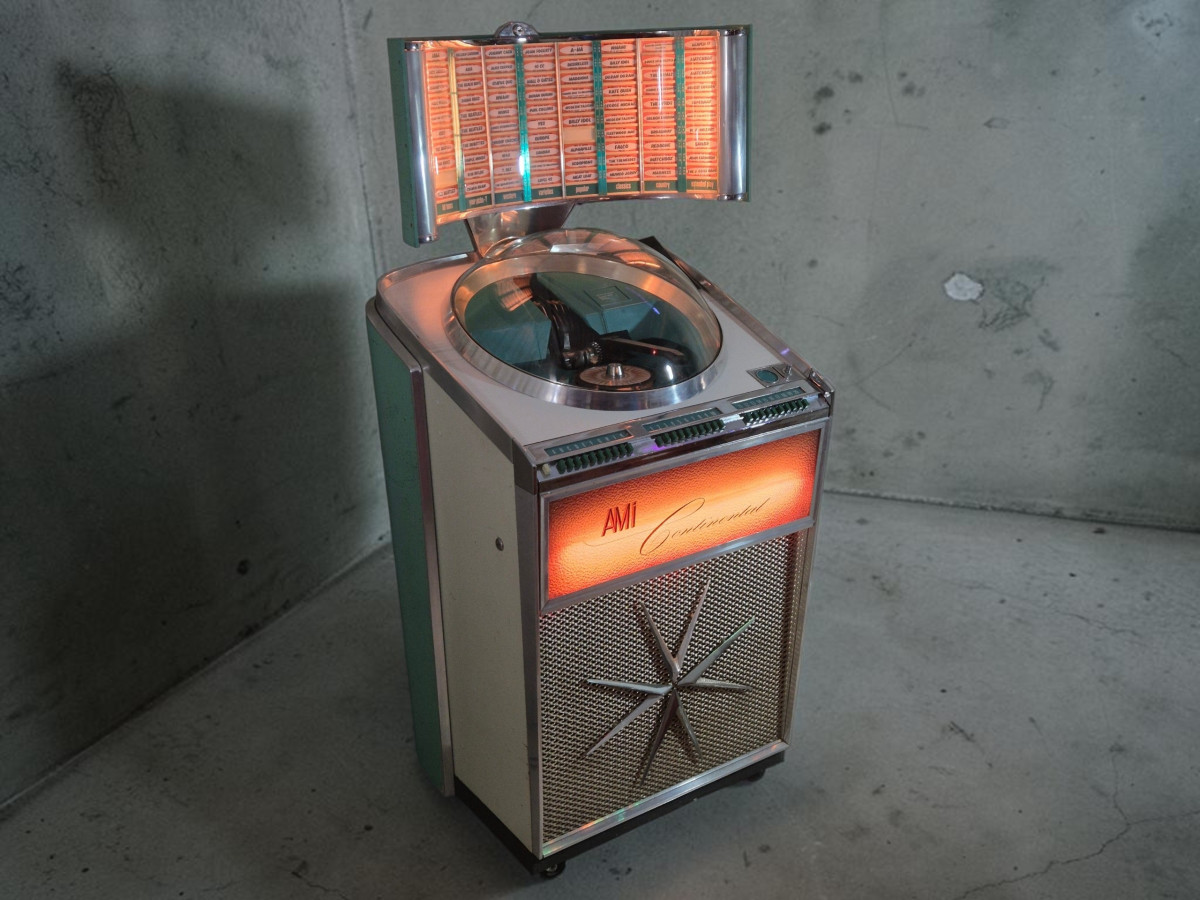
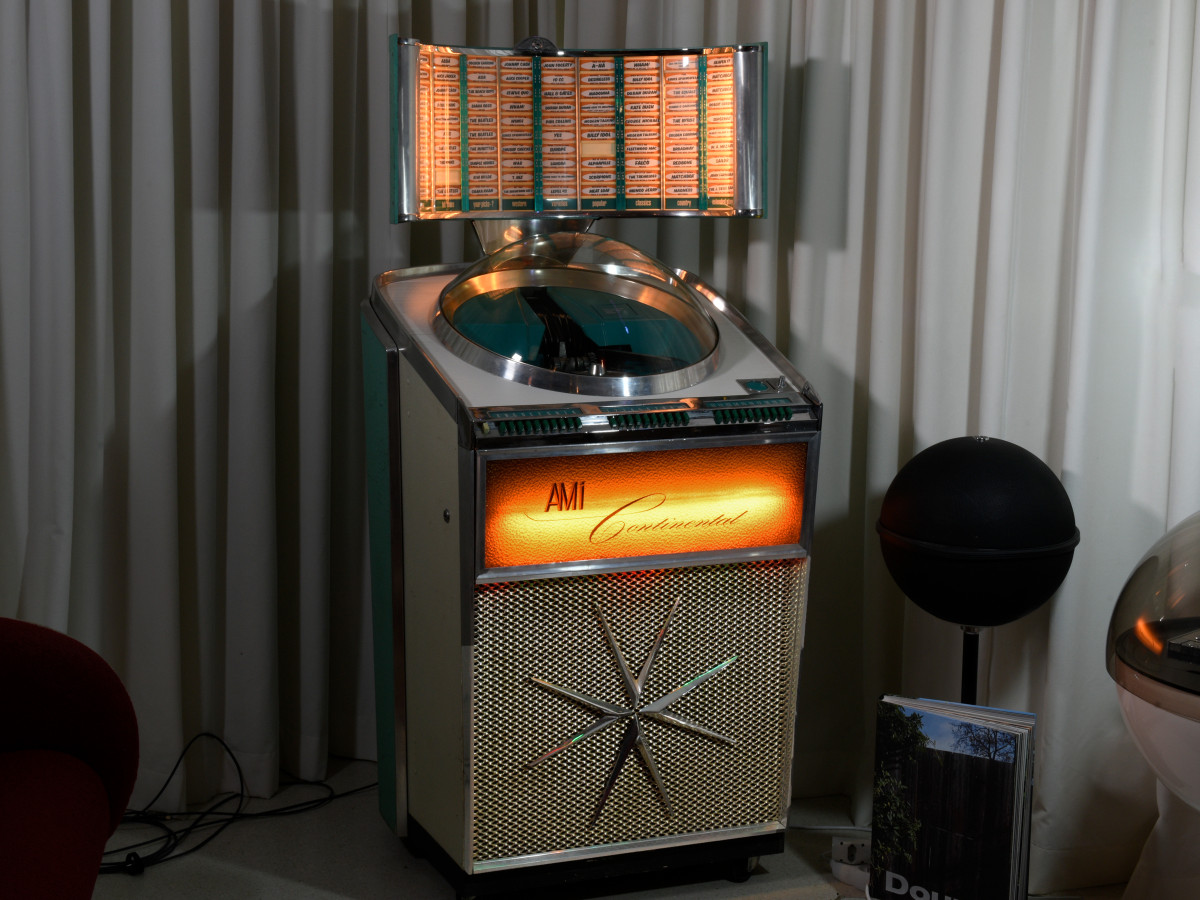

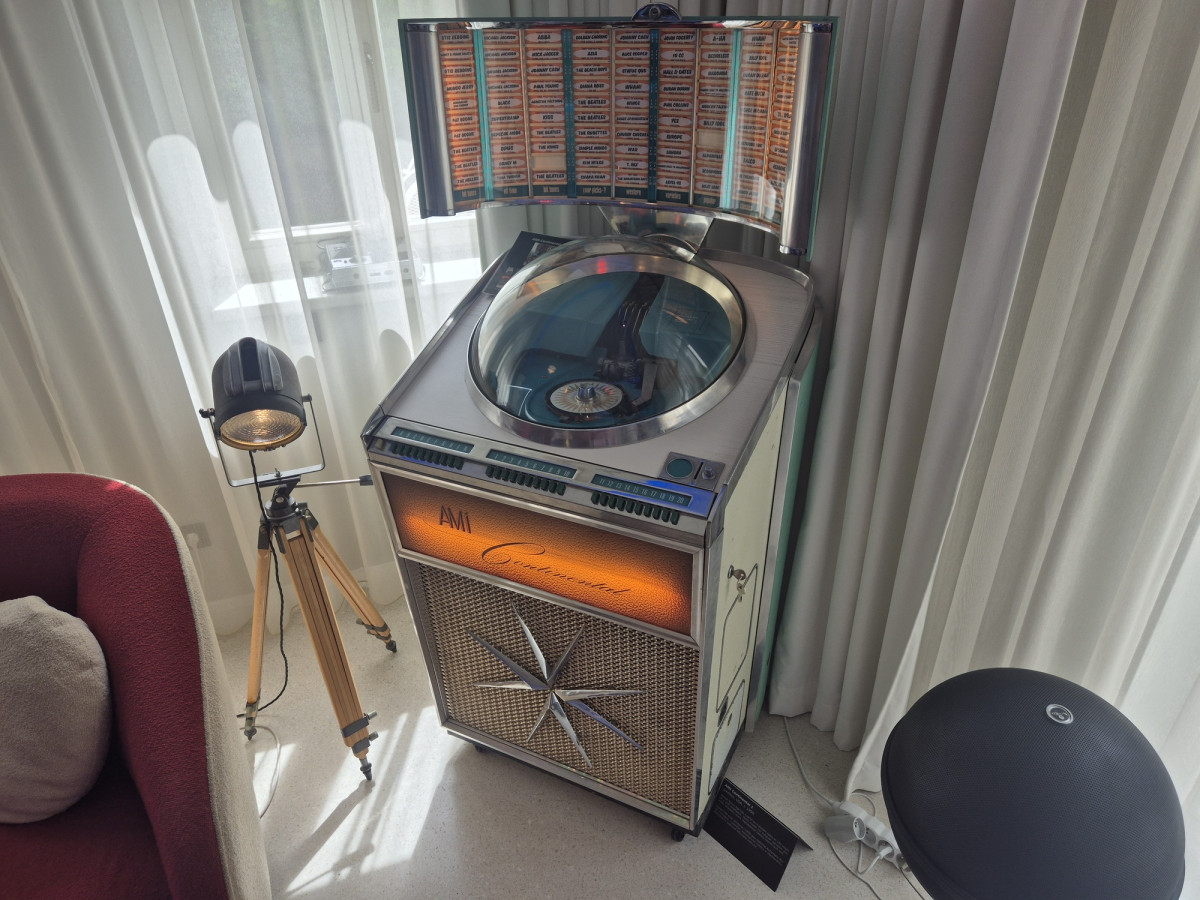
In 1960, a jukebox hit the scene that changed the rules of the game — the AMI Continental I. It marked the moment when the classic jukebox transformed into a design object of the future. With its rounded body, glowing glass dome, chrome lines, and above all, the iconic circular control panel reminiscent of a spaceship’s command console, it was unlike anything before.
At a time when the obsession with space and modernism was at its peak, the Continental I looked like something Elvis might’ve brought back from Mars aboard a Sputnik. Its style was bold, shiny, and impossible to ignore — a jukebox that demanded attention.
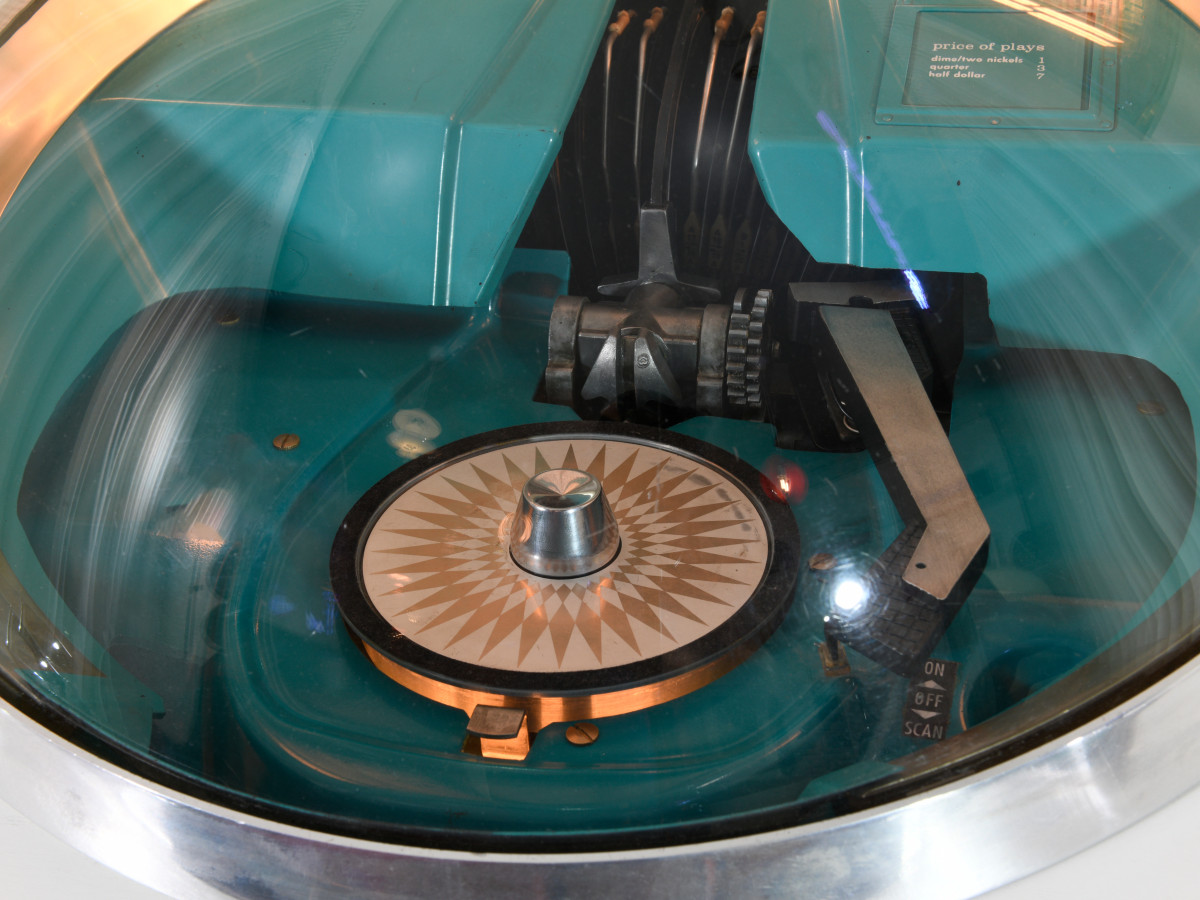
It offered playback of up to 100 records, meaning 200 songs, and stereo sound that was impressively powerful for its time. Thanks to its visible changer and lighting effects, every play became a miniature performance.
With this model, AMI (Automatic Musical Instruments) proved that music didn’t just have to sound great — it could look spectacular too. The Continental I was a pioneer: a jukebox that landed in bars and restaurants with the grace of Hollywood sci-fi.