
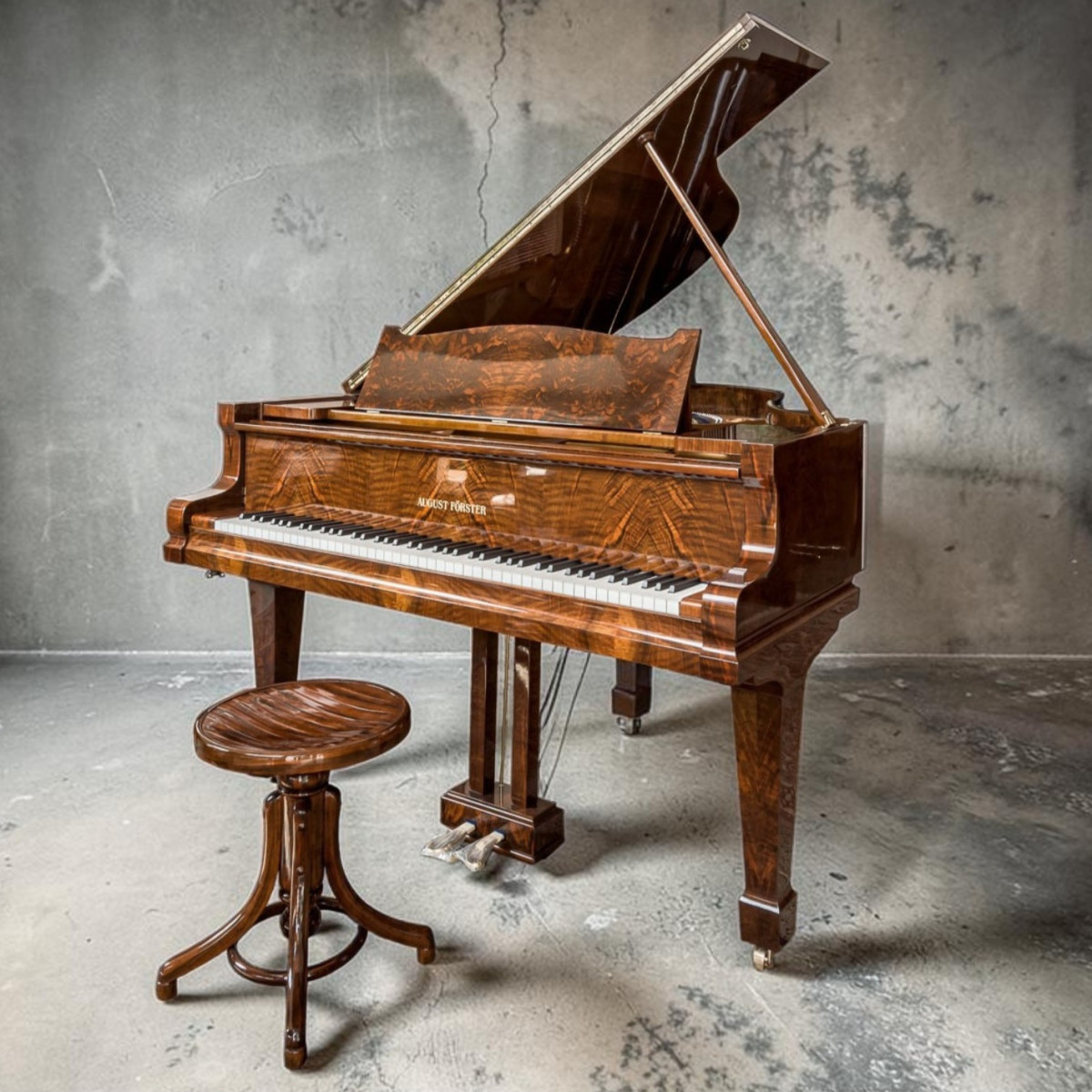
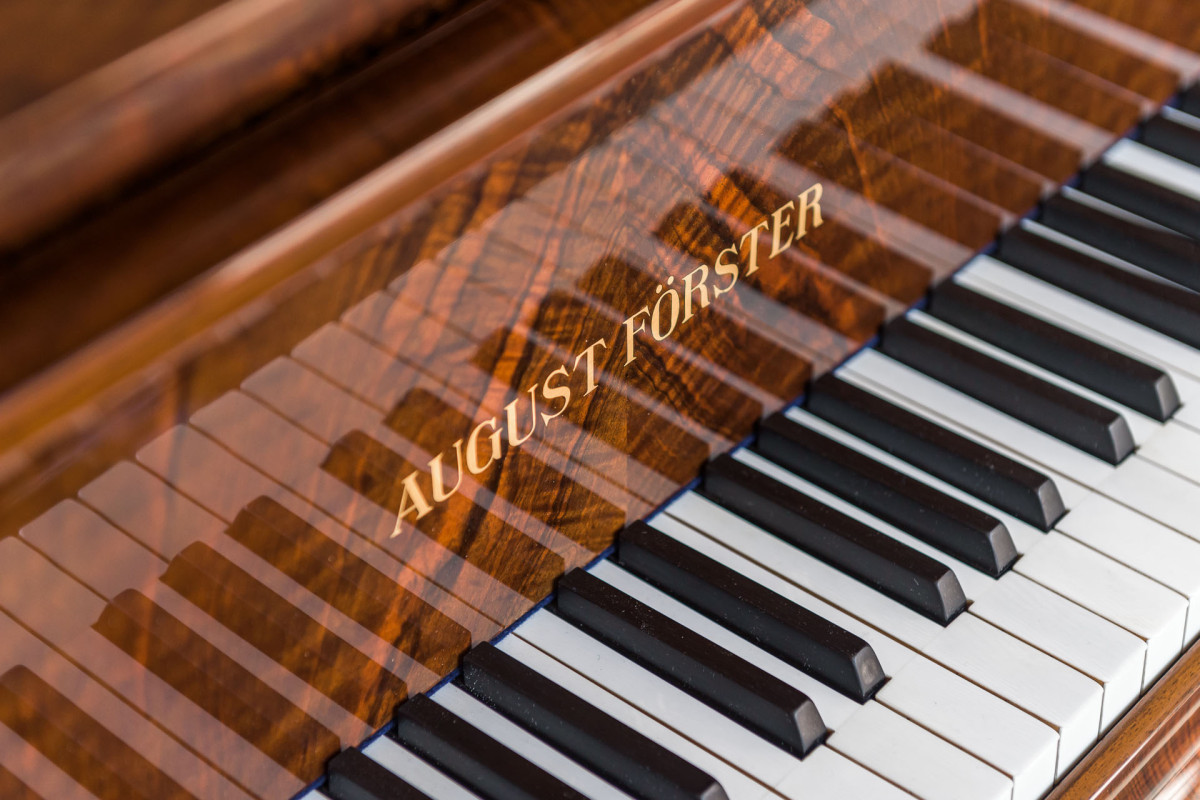
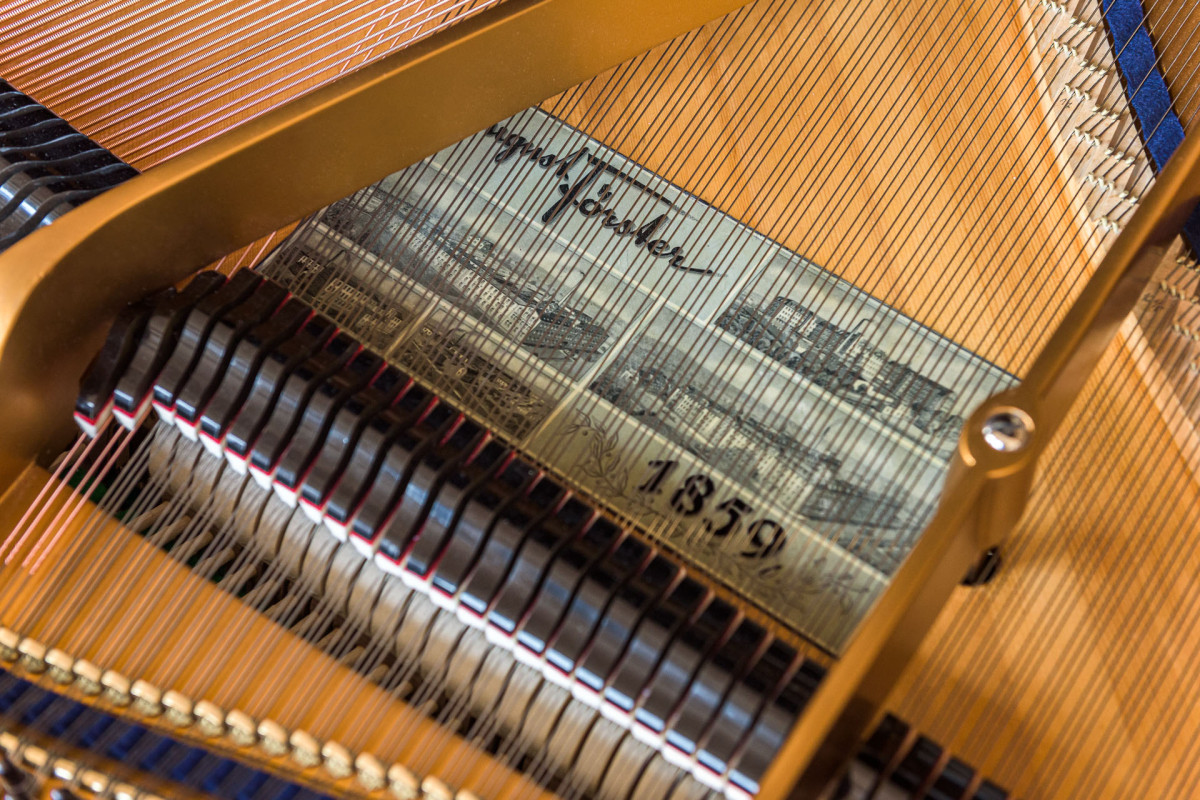
A 160‑centimetre cabinet grand by a legendary family firm that, remarkably, still builds pianos today.
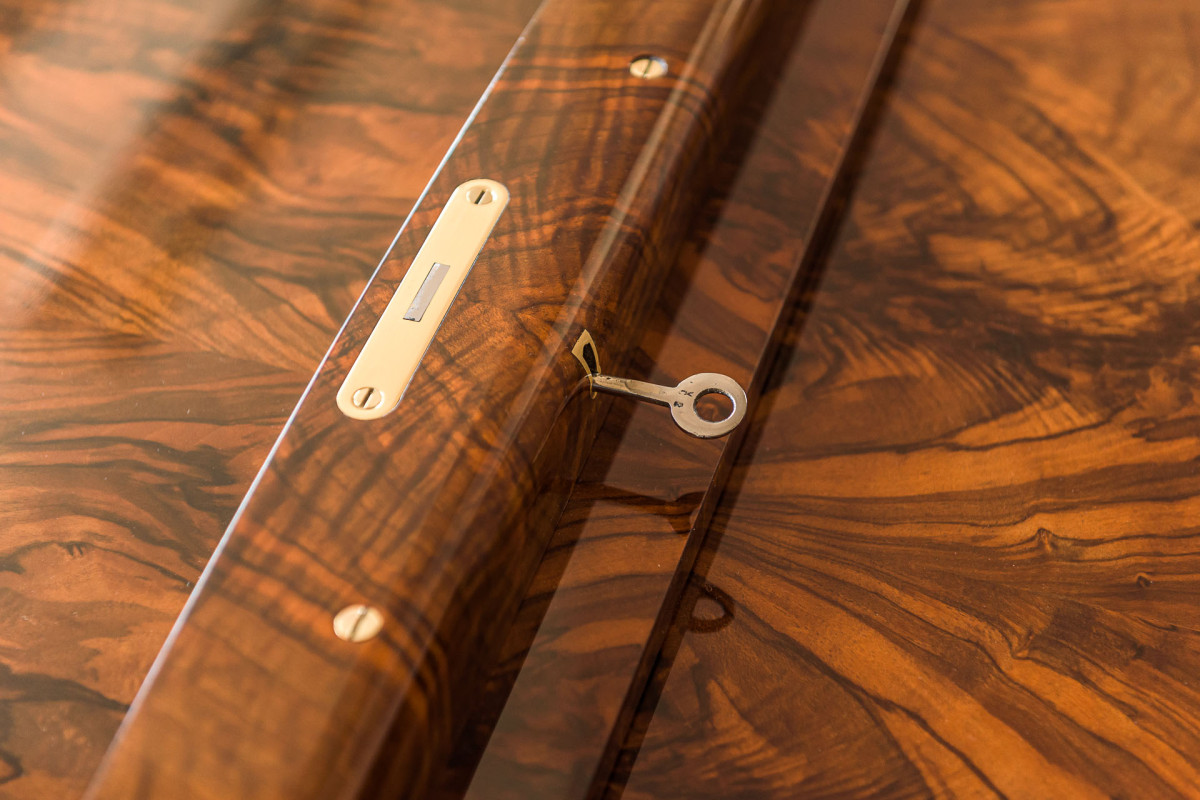
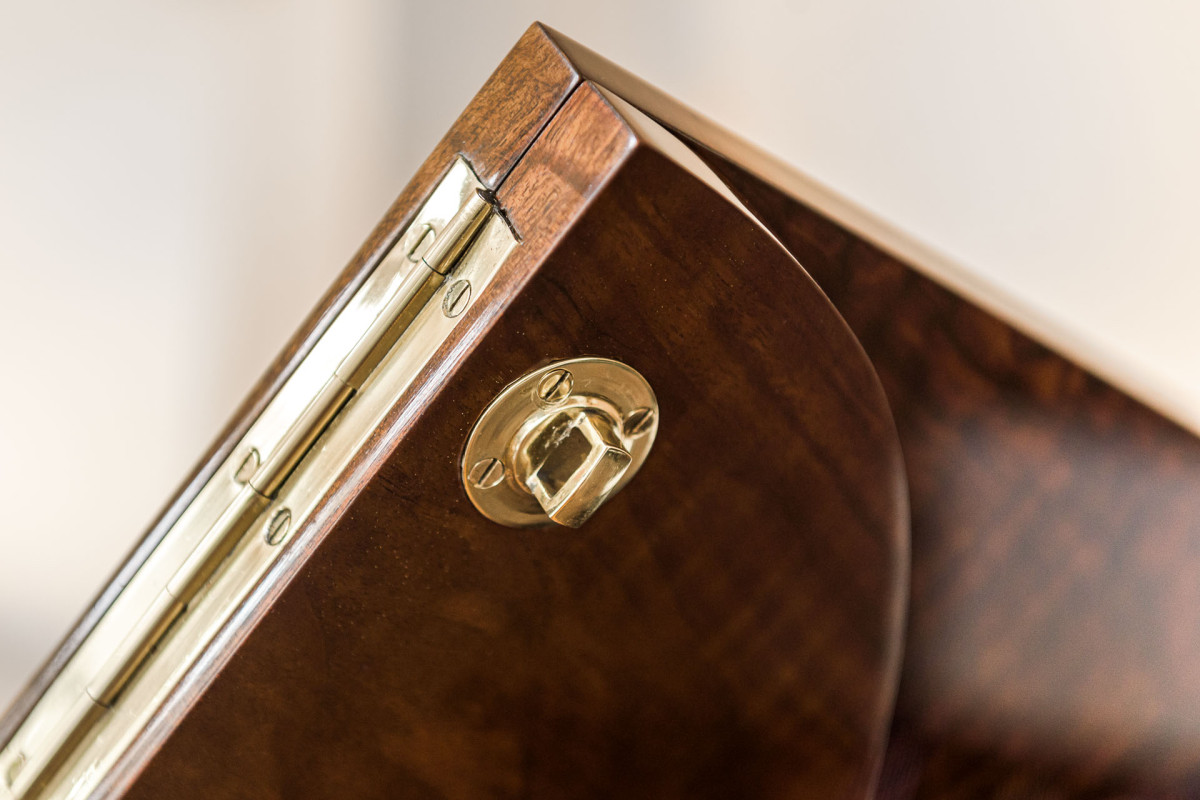
This elegant instrument is a fine example of the superb Czech craftsmanship of the 1930s. It was rediscovered in Slovakia, where it had been sold during the First Republic, and meticulously restored using period materials and techniques by Jakub Zahradník (pianoteka.cz). Its renewed life began on 31 March 2021, when it was played during a television recording featuring Jiří Suchý and the Emil Viklický Trio.
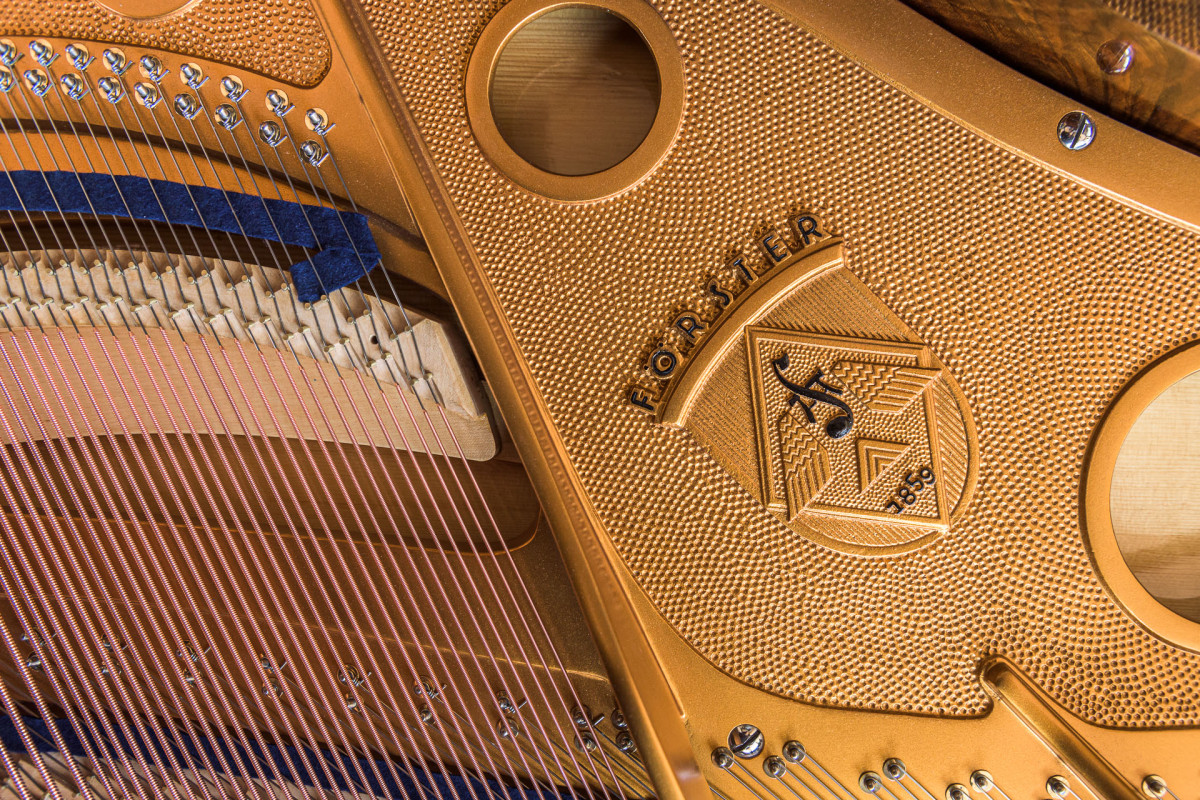
The story of the brand reaches back to 1859, when August Förster founded his workshop in the Lusatian town of Löbau, just fifteen kilometres from the Czech border. Business flourished, and in 1900 Förster built a second factory only a few steps across the frontier, in Jiříkov — then Georgswalde. The move was a clever response to the high customs duties between Saxony and Austria‑Hungary: with two factories, the company could supply both neighbouring markets without barriers, and production soon grew rapidly. The Jiříkov plant operated independently, run by Förster’s two sons, which is why there are two distinct lines of August Förster instruments, labelled by origin — Löbau in Sachsen and Georgswalde in Böhmen (later Czechoslovakia). Both enjoy an excellent reputation.
The Förster family were remarkably progressive innovators. They developed quarter‑tone pianos, sixth‑tone harmoniums, and other unusual experimental instruments.
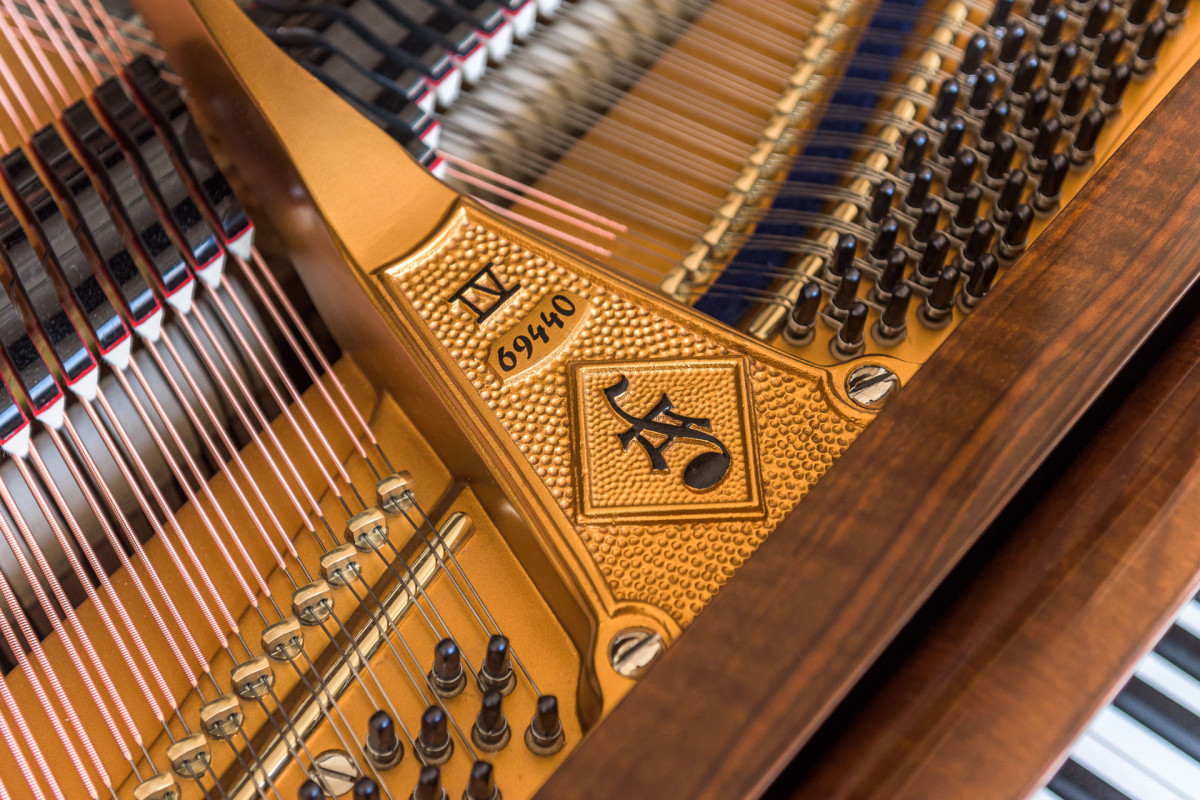
Originally, both factories shared a single opus numbering system. After the Second World War, however, the Czech factory was nationalised as German property. From that moment on, Czech‑made Förster pianos were numbered together with the newly introduced Weinbach brand, starting at opus number 60,000 — the approximate count of instruments produced by the German factory at that time. The German Förster line continued its original numbering.
This arrangement lasted until the early 1990s, when the German factory was returned to the Förster family, while the Czech plant passed to the Petrof family, who soon ended production in northern Bohemia.