


Wurlitzer C-110 Cassette – A Last Attempt to Save the Legend
The Wurlitzer C-110 Cassette, released in 1972 and manufactured in Germany – the country of the brand’s founders – was a bold attempt to adapt the classic jukebox to a new music format: the audio cassette.
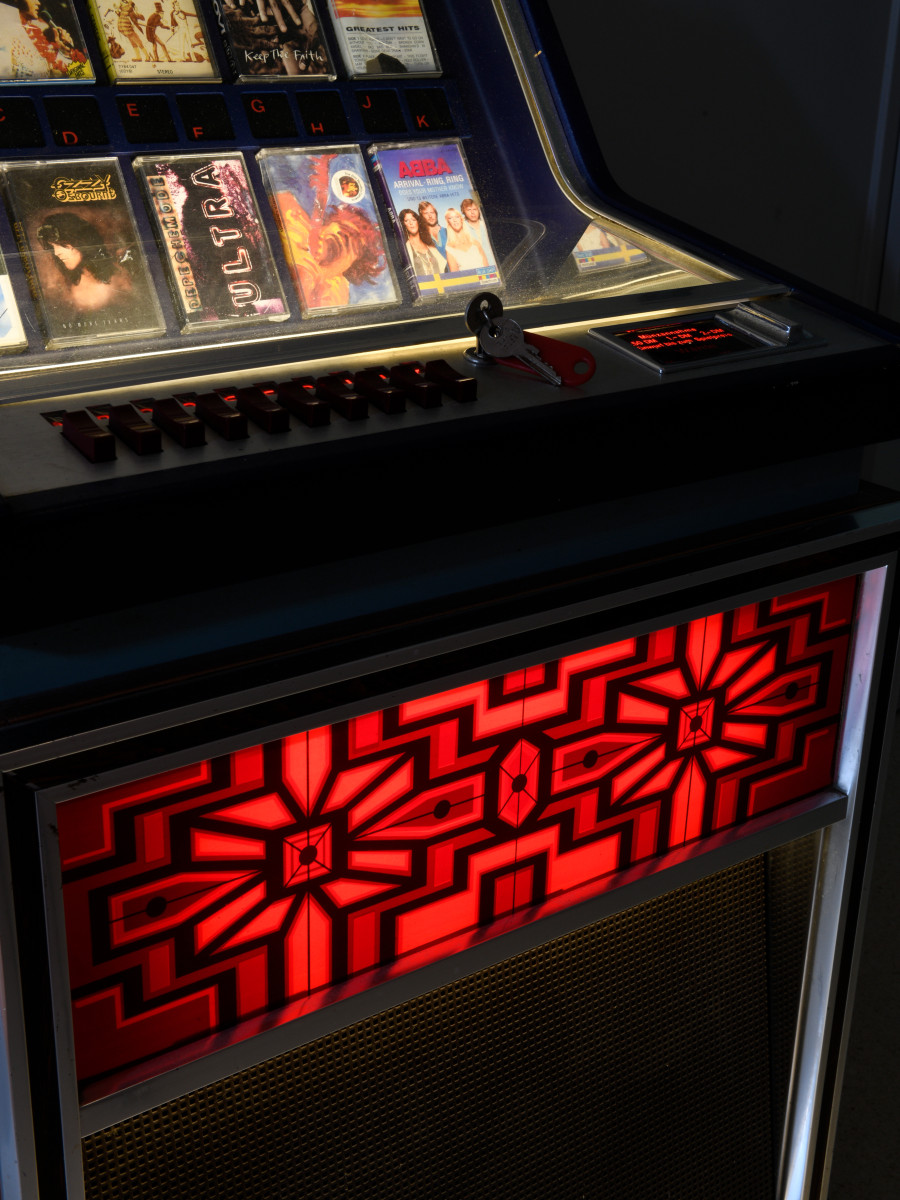
Instead of vinyl records, this model played 10 cassette tapes, whose covers were visibly displayed behind the front glass. This allowed users to choose visually, just like with traditional jukeboxes – but instead of a needle dropping on a record, they heard the warm magnetic sound of tape.
Inside was a specially engineered playback mechanism designed to automatically switch and play the cassettes. Visually, the machine reflects the early 1970s aesthetic – clean, boxy lines, metallic surfaces, and a straightforward selection panel with buttons.
The Wurlitzer C-110 represents a transition between the mechanical and electronic eras of music. It was the final voice of the jukebox age, a last effort by the legendary brand to stay relevant in a world that was rapidly embracing new technologies and formats.
Today, this model stands as a rare technical and design curiosity – a witness to changing times and the courageous final step of a cultural icon.