
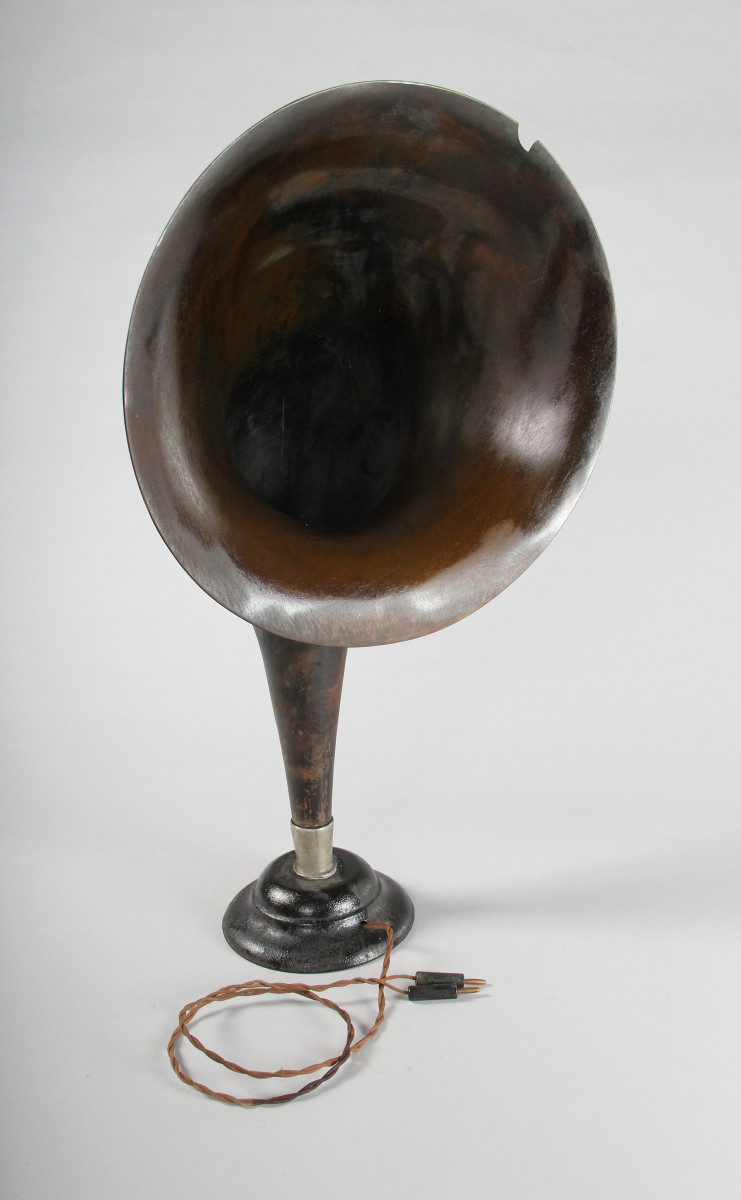
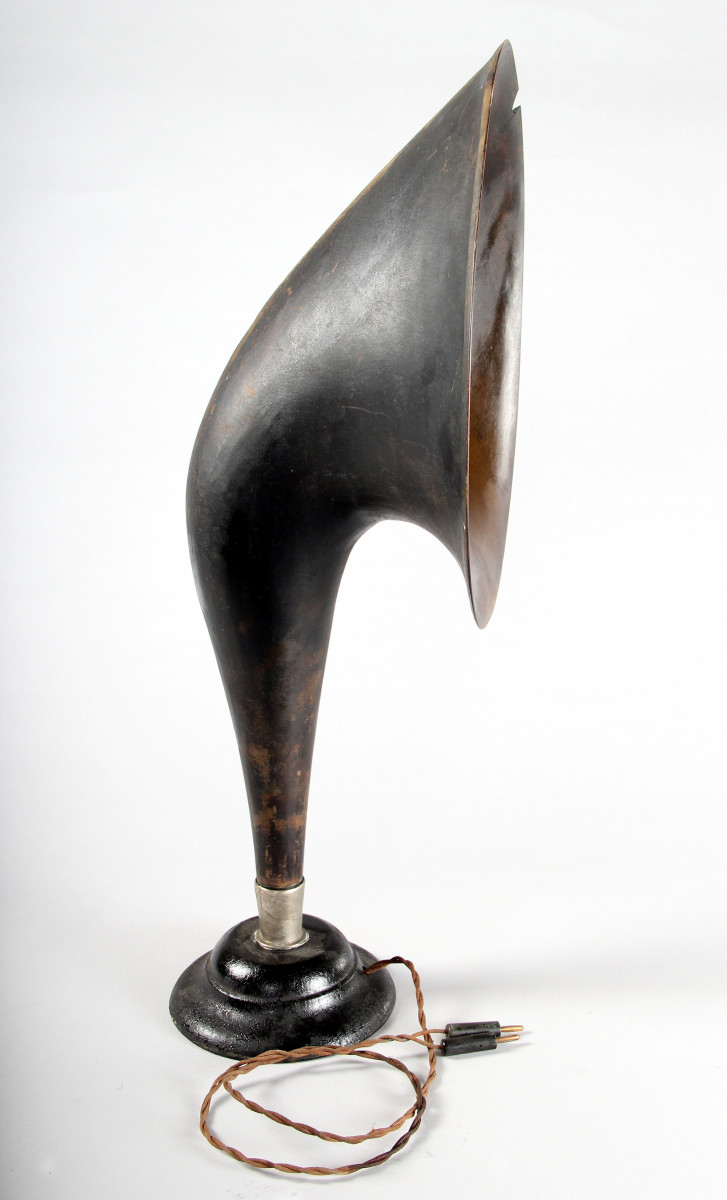
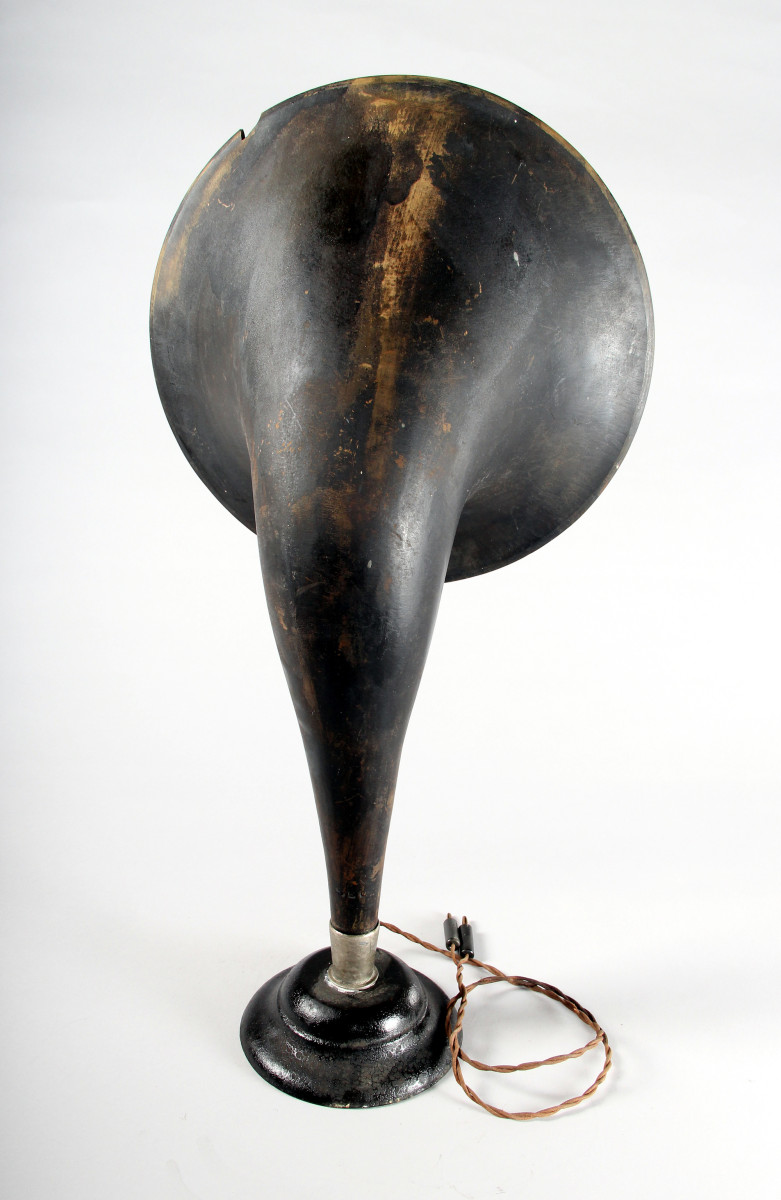
In the 1920s, external speakers for radios were often designed as horn-type acoustic conduits, inspired by the principles of gramophone funnels. These speakers employed an electromagnetic driver that converted electrical signals into mechanical vibrations of a diaphragm. The sound was then acoustically amplified through a conical or spiral-shaped horn, achieving relatively good efficiency even without an electrical amplifier.
Brands such as Atwater Kent, RCA, and Magnavox produced iconic models featuring brass or Bakelite horns. However, these designs were gradually replaced by cabinet-style speakers with paper diaphragms, offering both improved sound quality and greater design versatility.