
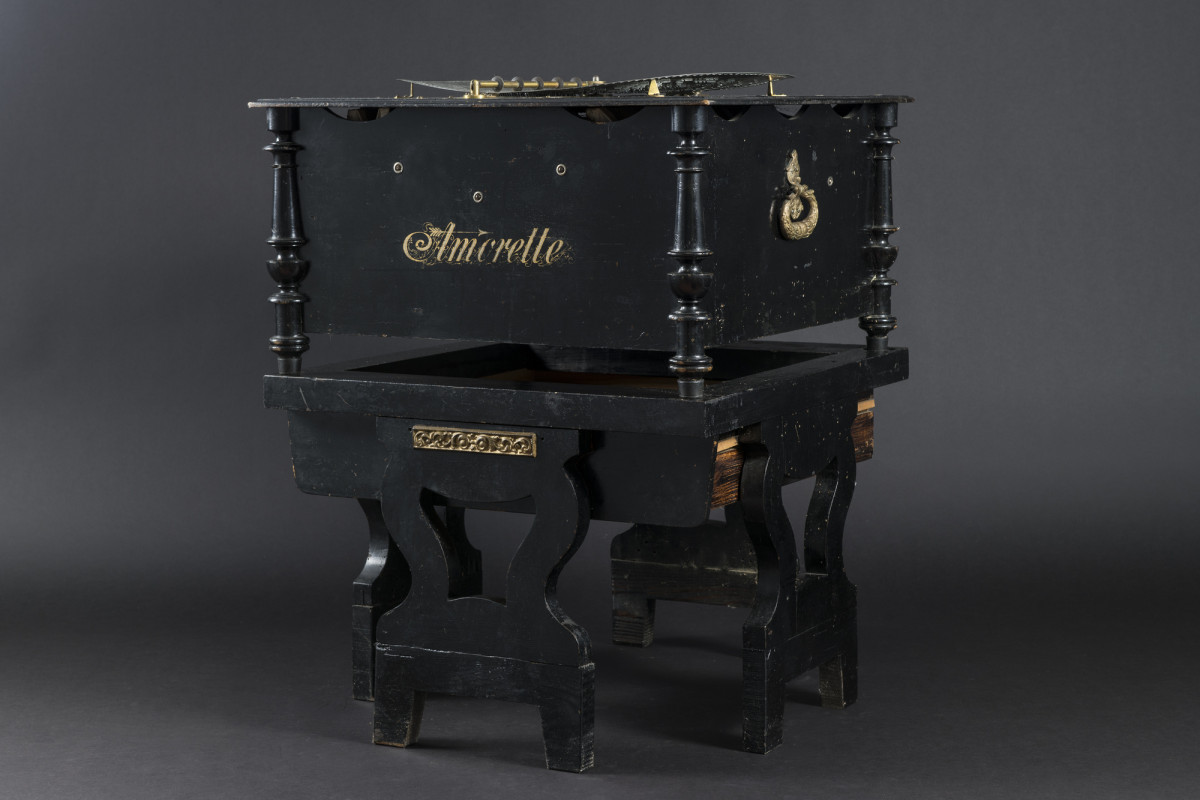
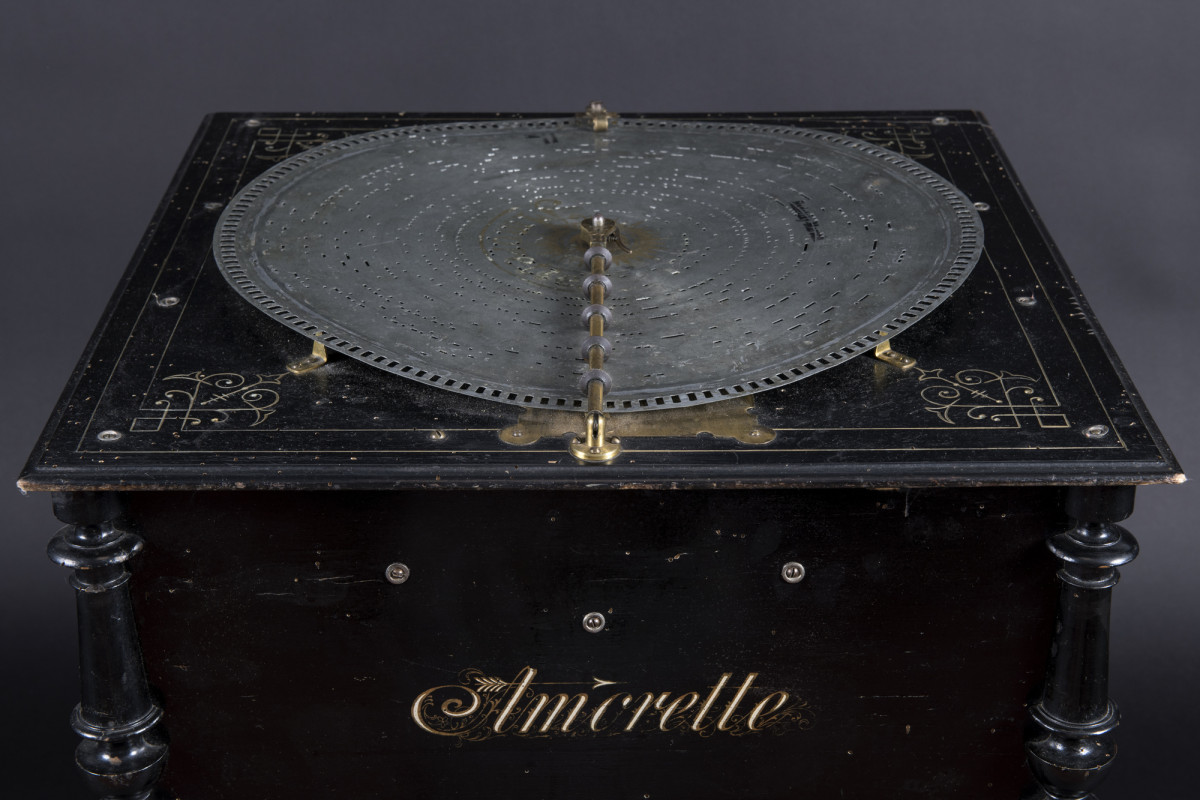

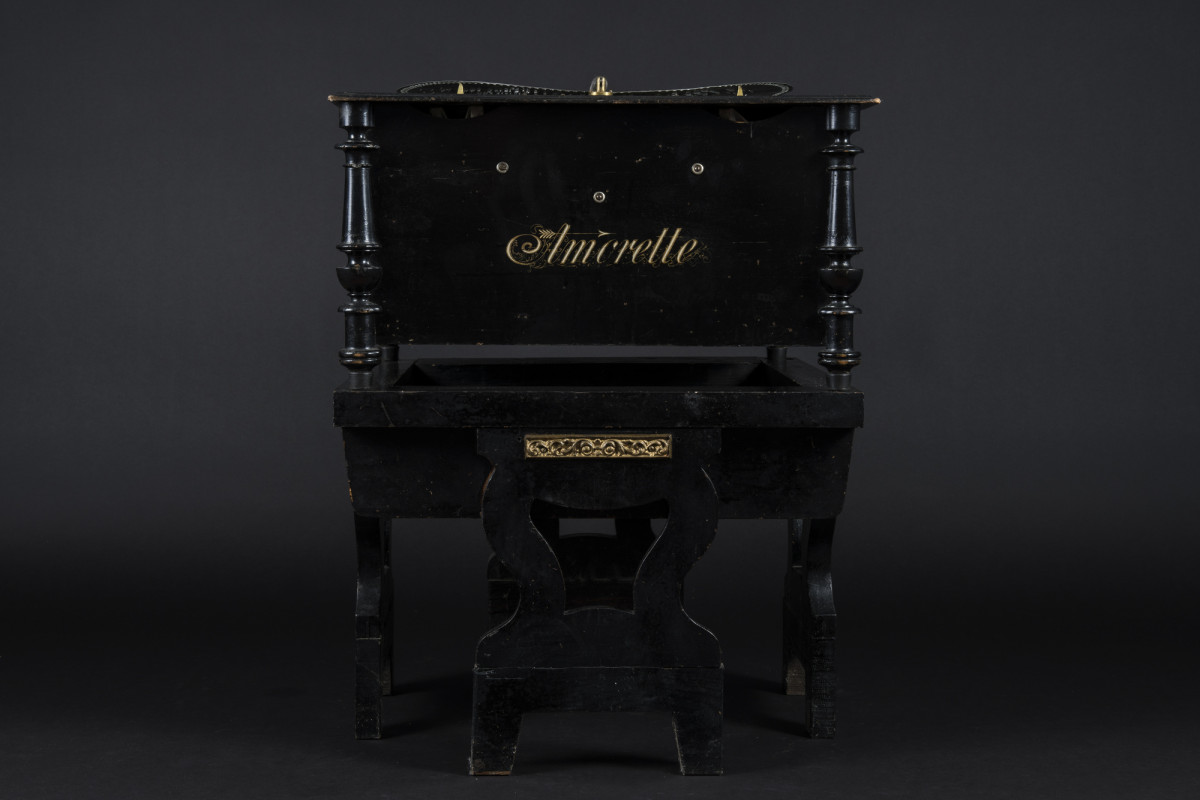

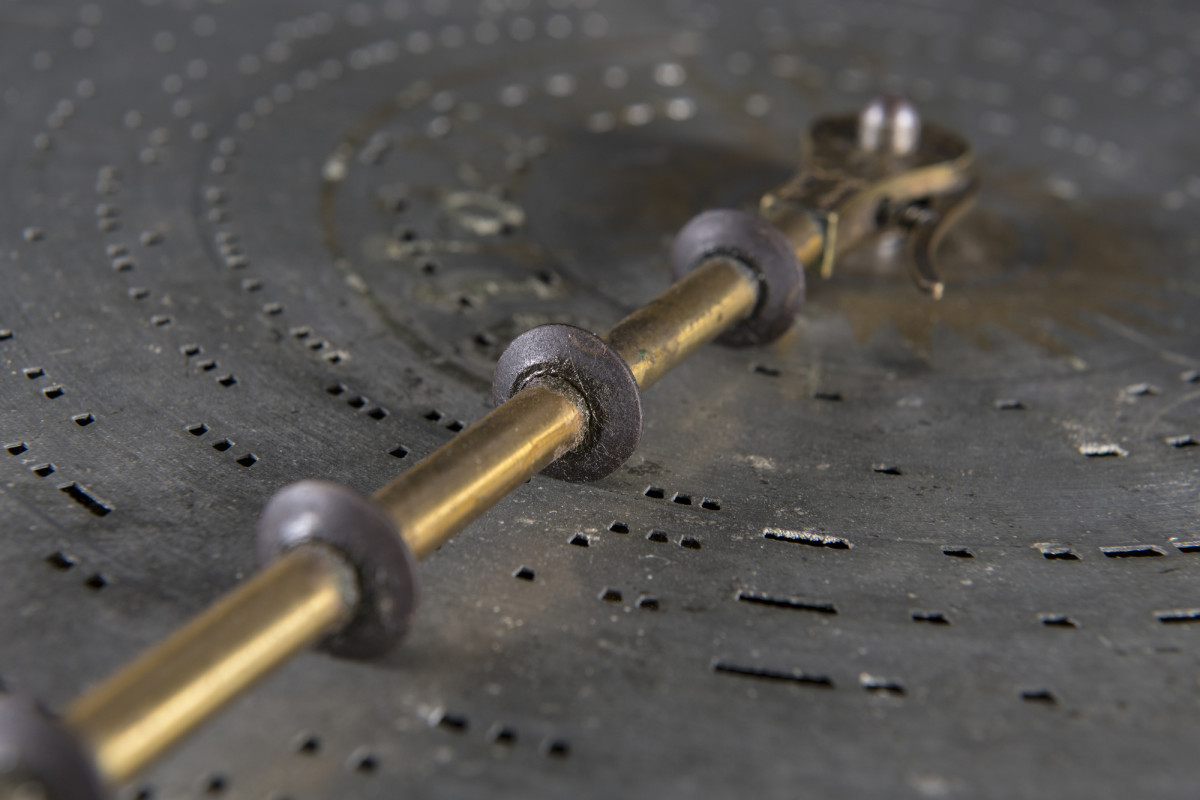
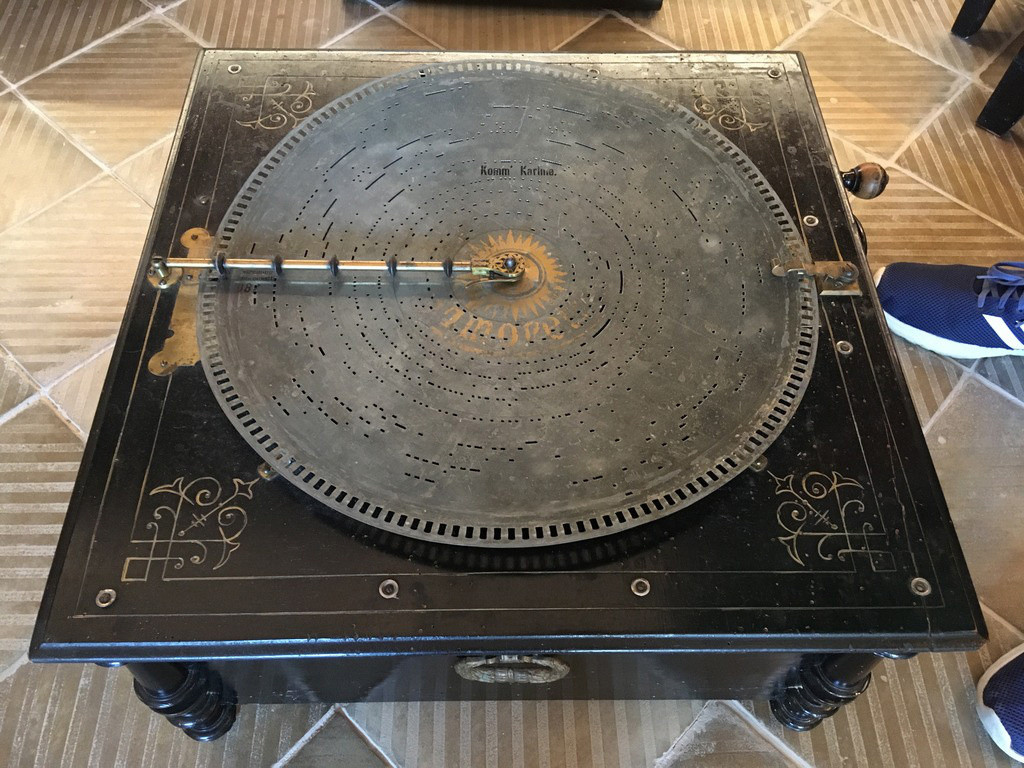
The largest polyphon in our collection comes from the German company Leipziger Musikwerke Euphonika. Its primary purpose was similar to an early jukebox—typically placed in taverns and pubs to entertain guests.
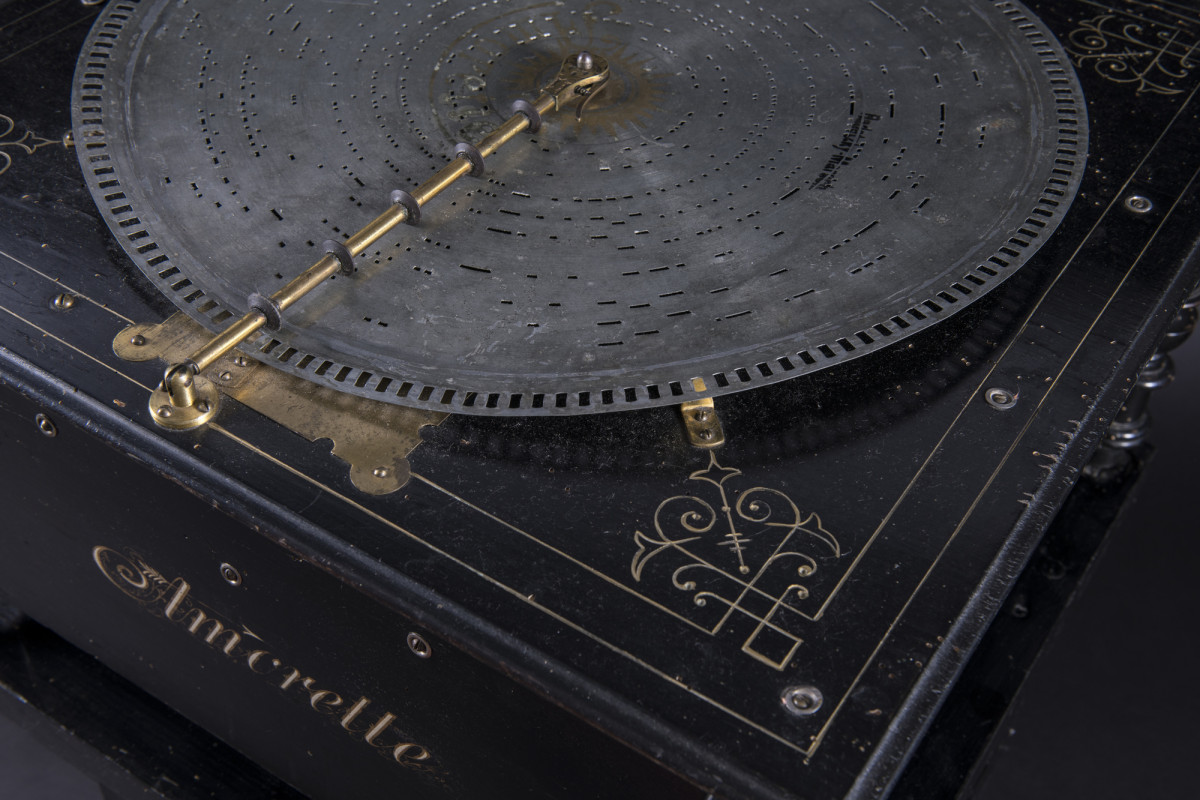
As a data medium, it used a metal disc featuring popular melodies of the time—essentially a predecessor to today’s CDs. Instead of digital ones and zeros, the disc had small protrusions. As it rotated, these raised tuned metal reeds, causing them to vibrate and produce delicate, distinctive tones.
Thanks to this mechanism, the polyphon could play complex melodies and even multiple tones simultaneously, a technique known as polyphony—or multi-voice music.