
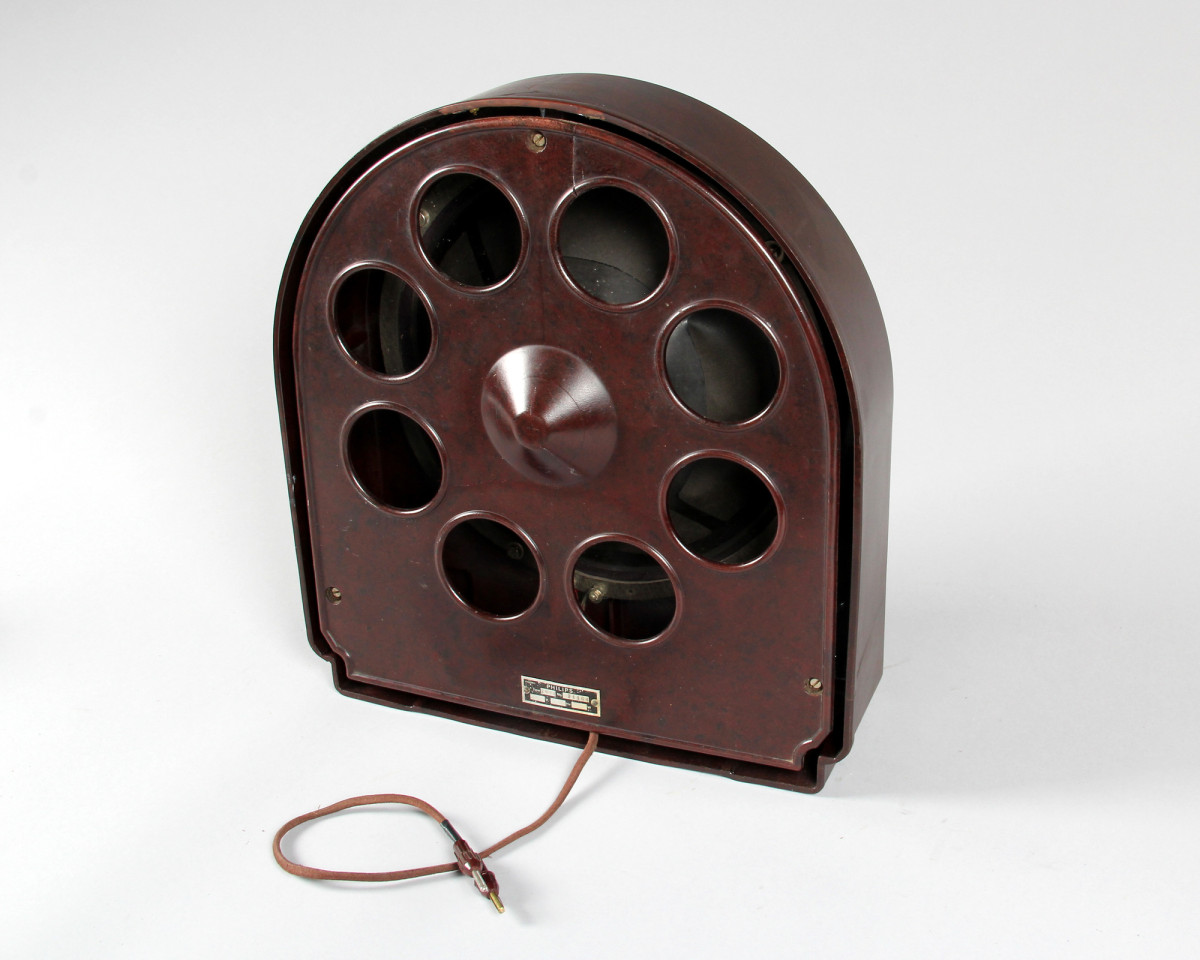
In the 1920s, when the first radio receivers began to be manufactured and sold, they were characterized by their simplicity. This meant they lacked a built-in speaker. To listen, users either had to wear headphones or purchase an external speaker, which was connected to the radio as a separate unit via a cable.
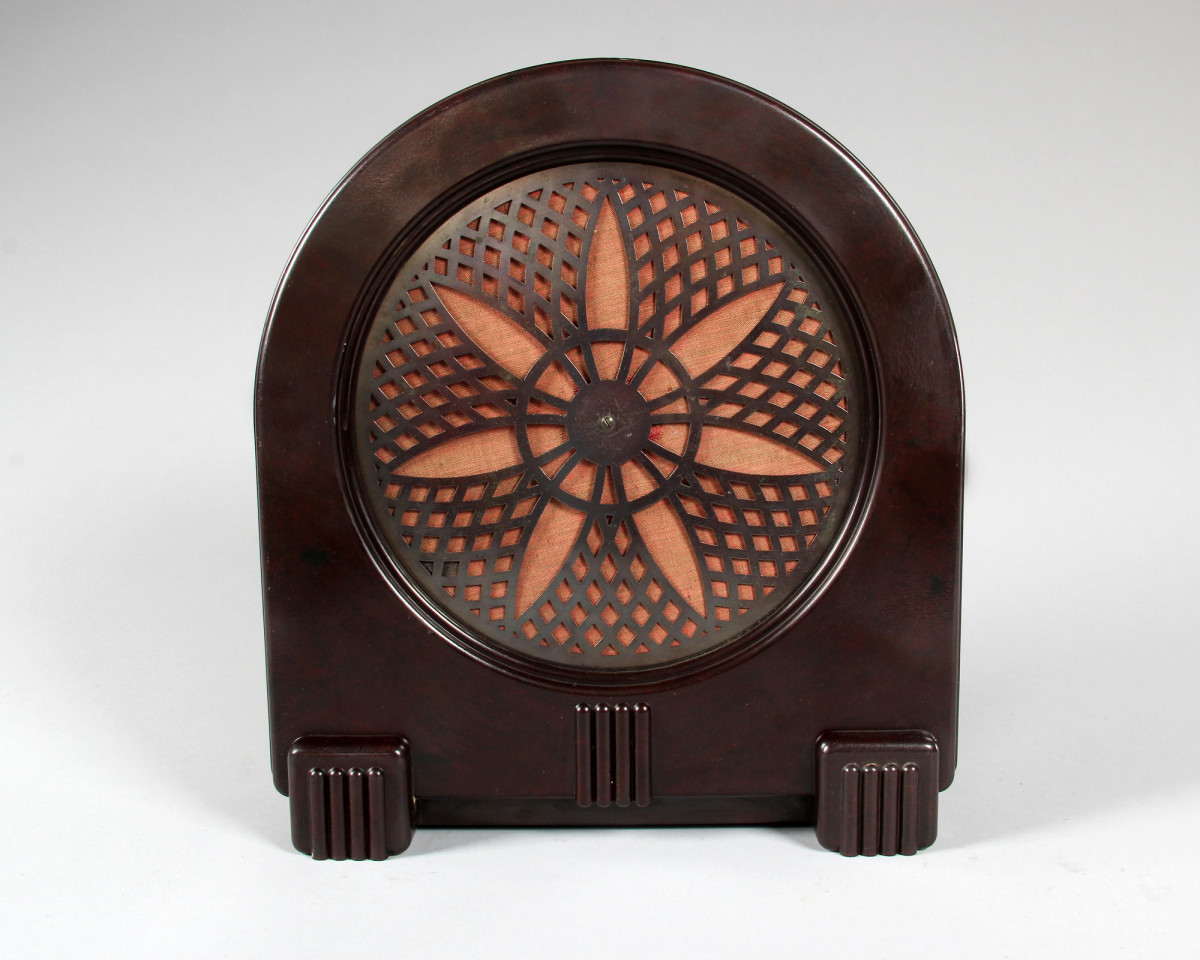
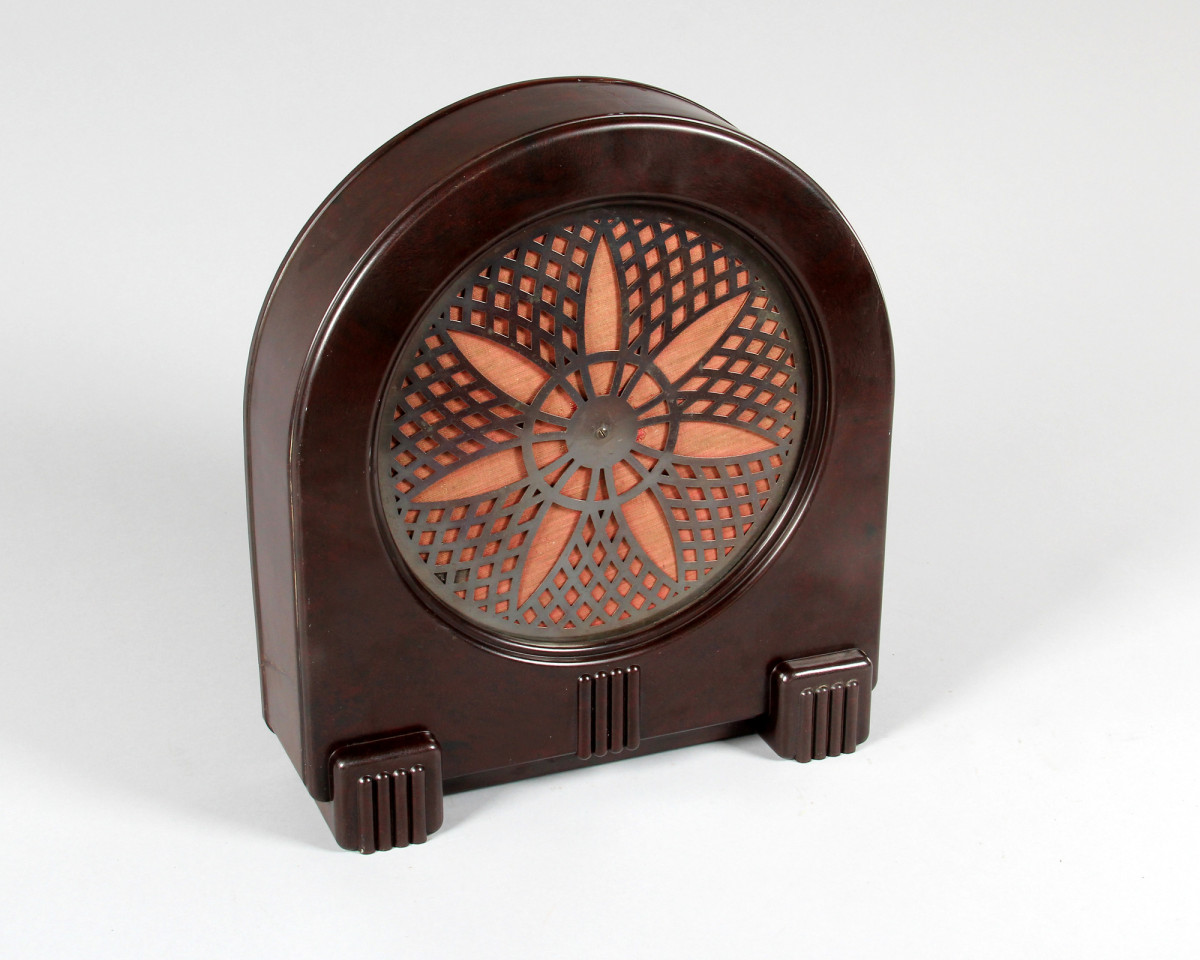
Initially, these external speakers took the form of aluminum or Bakelite horn designs. However, magnetic speakers soon emerged, housed in their own wooden or Bakelite cabinets, carefully designed to visually complement the radio itself.
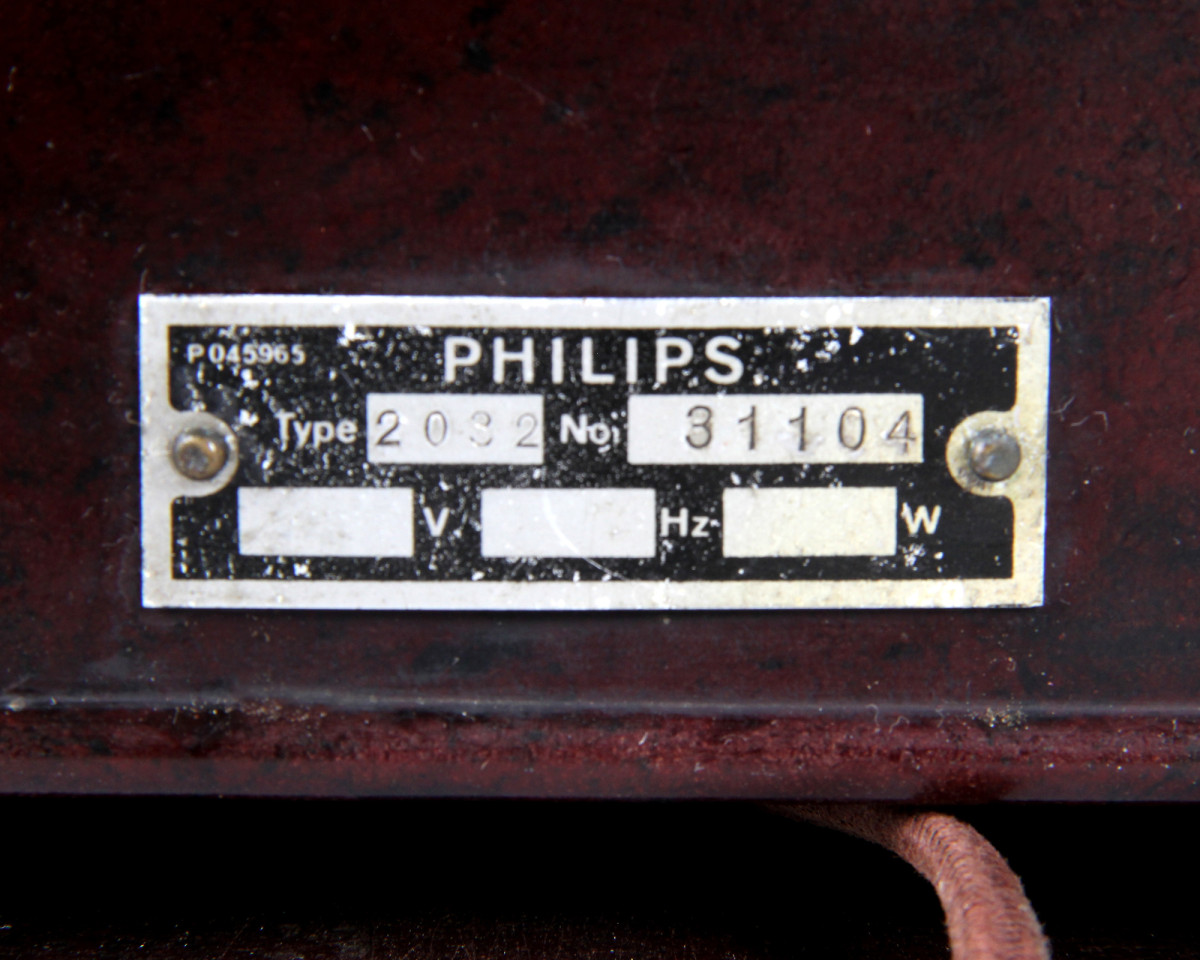
Such is the case with the Philips model 2032. This all-Bakelite device was intentionally styled to match the similarly Bakelite-constructed receiver, creating a cohesive visual set.