
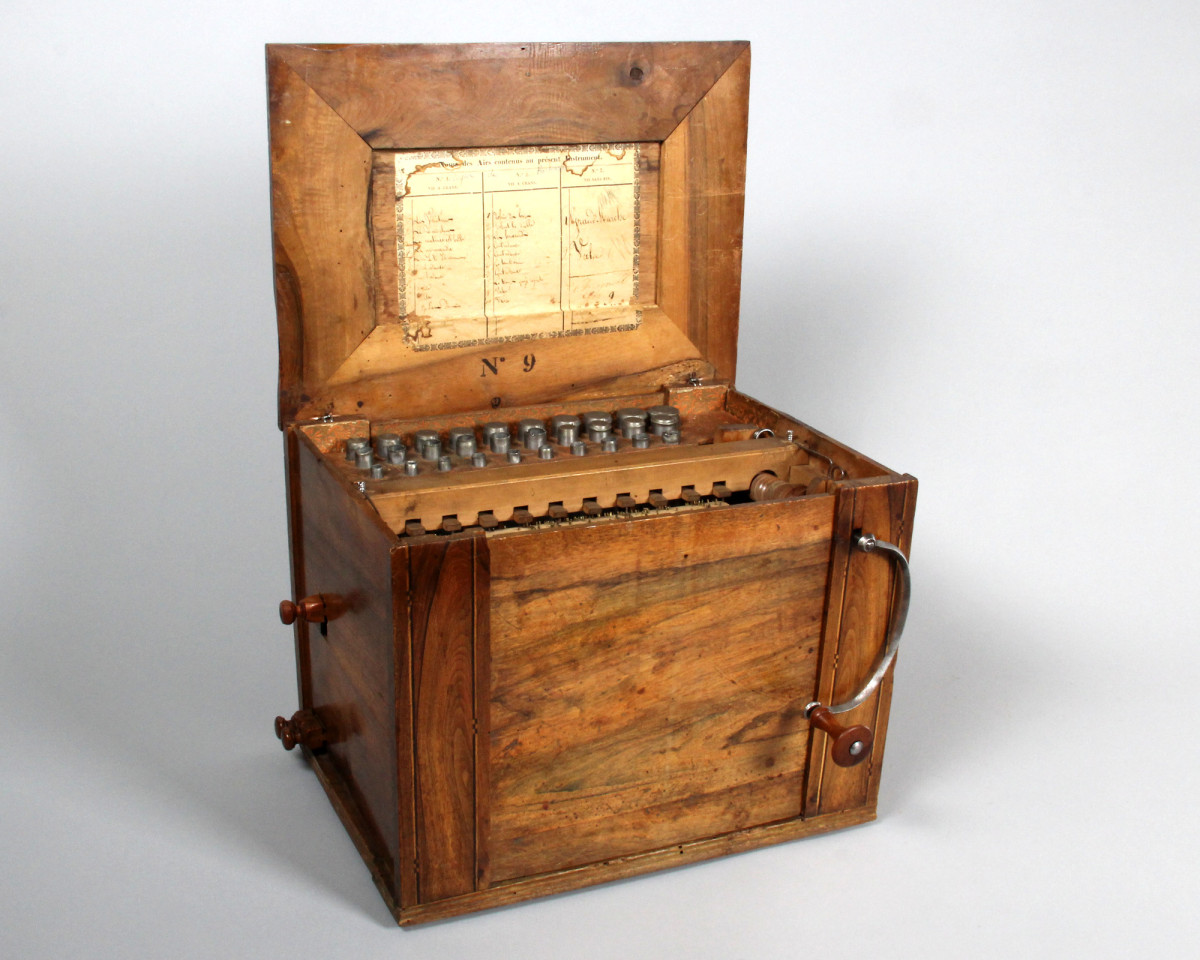
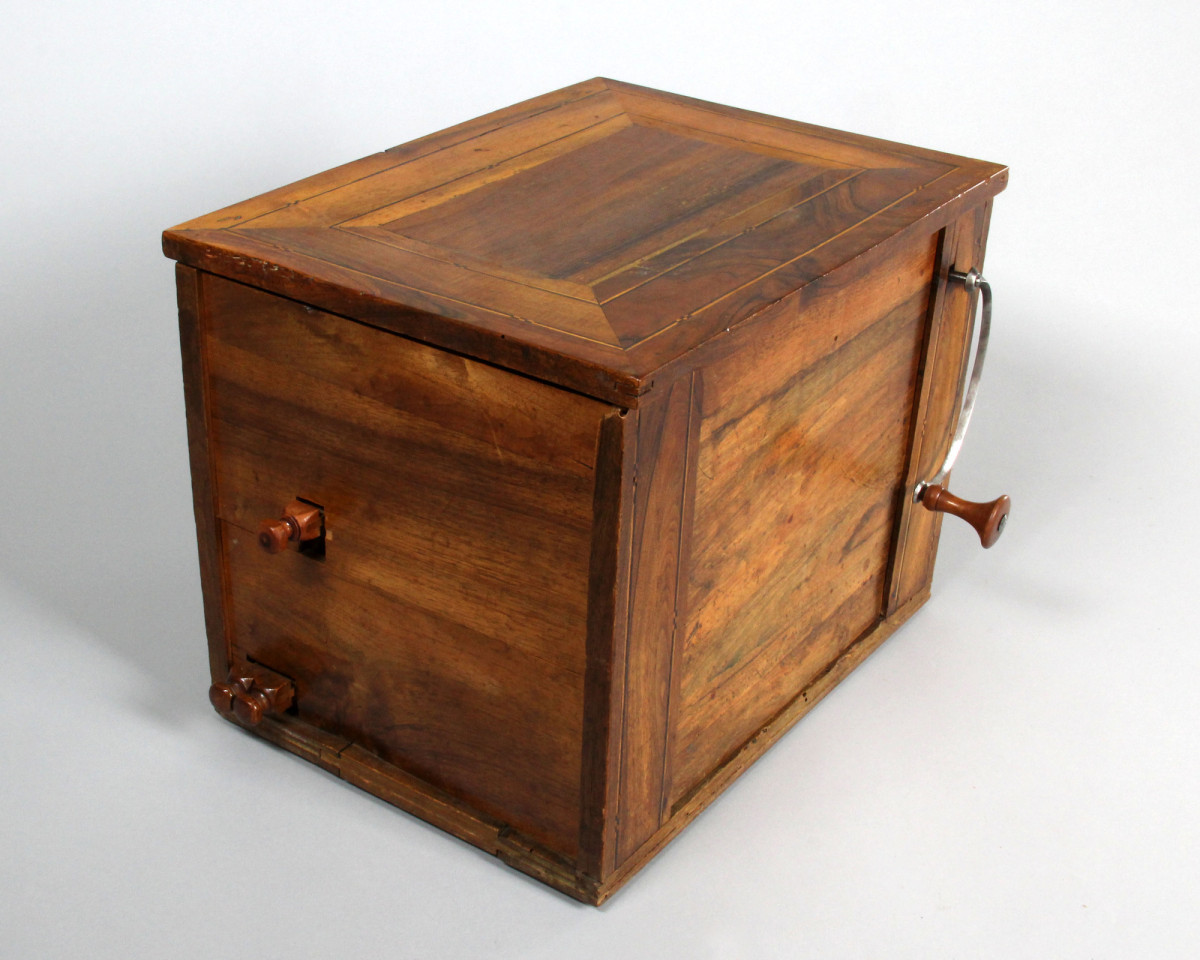
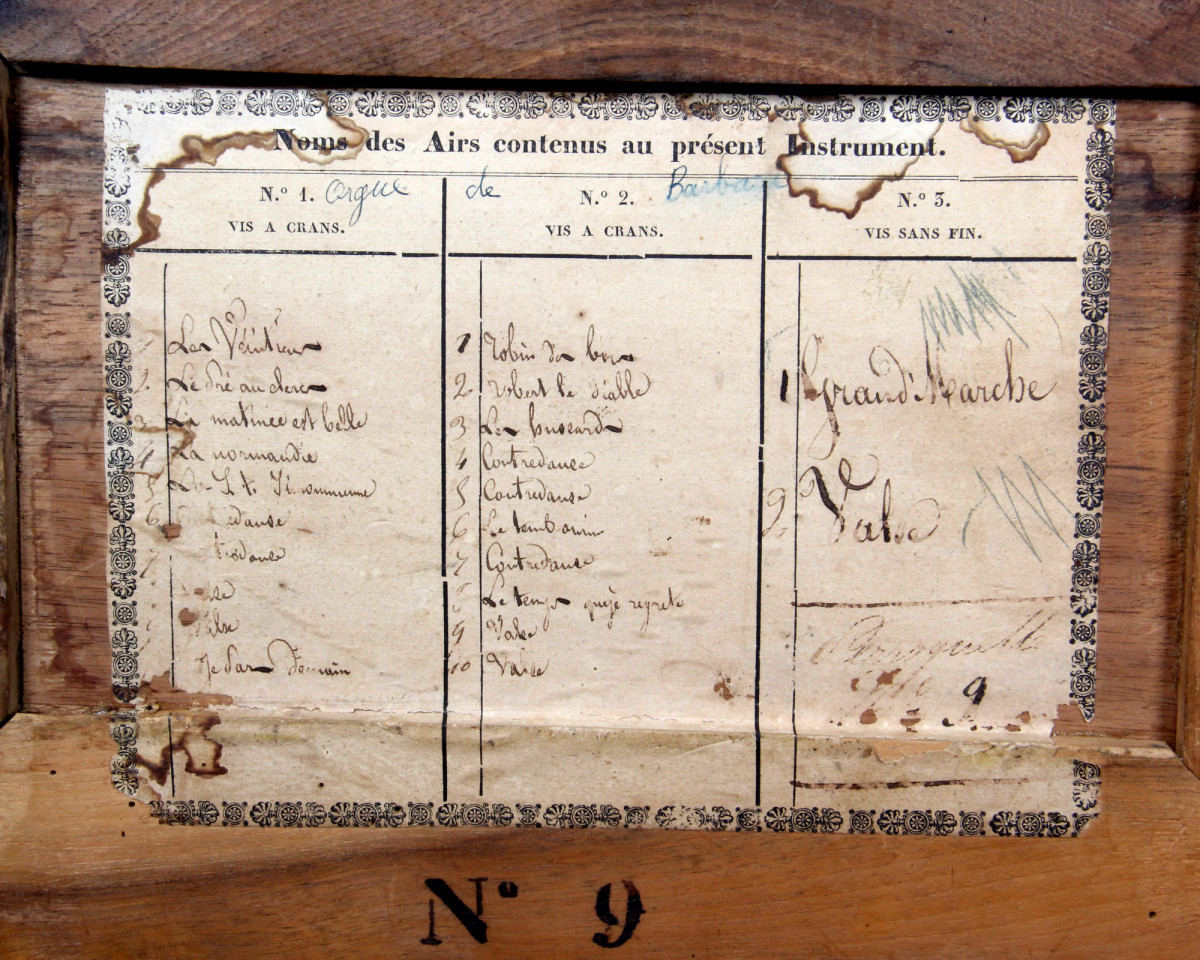
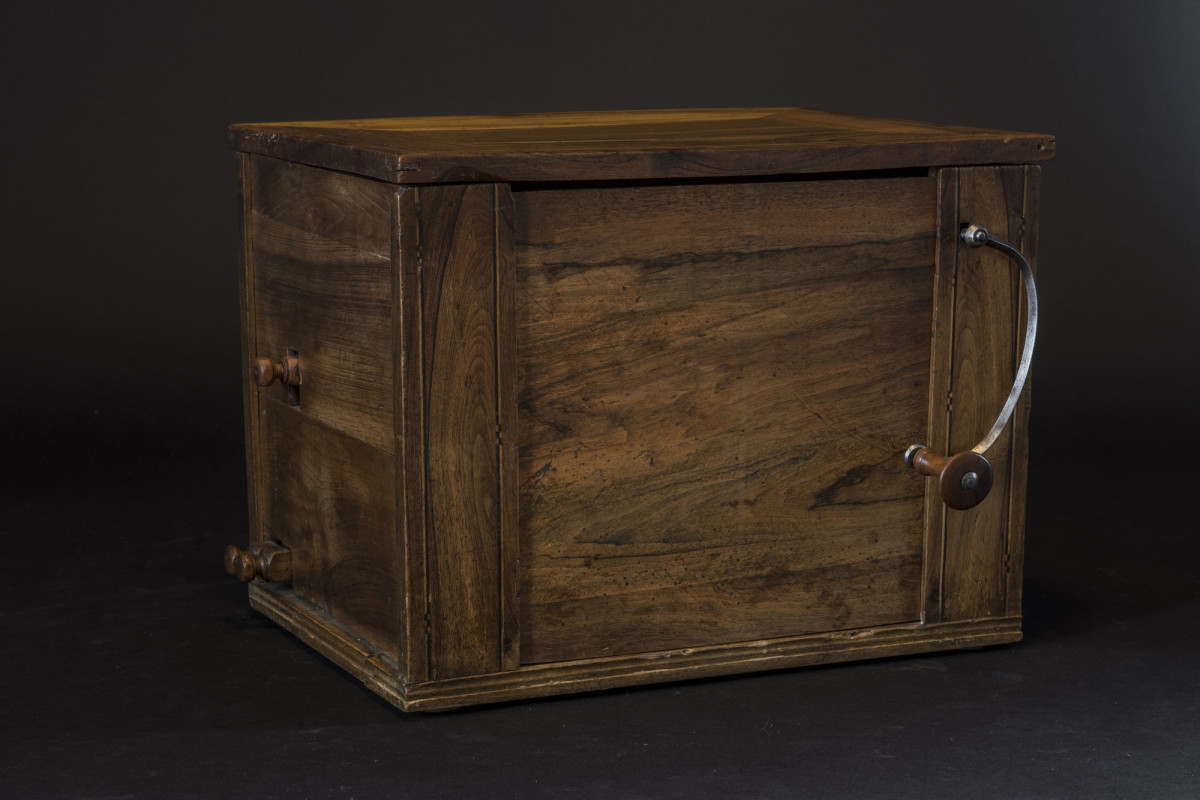
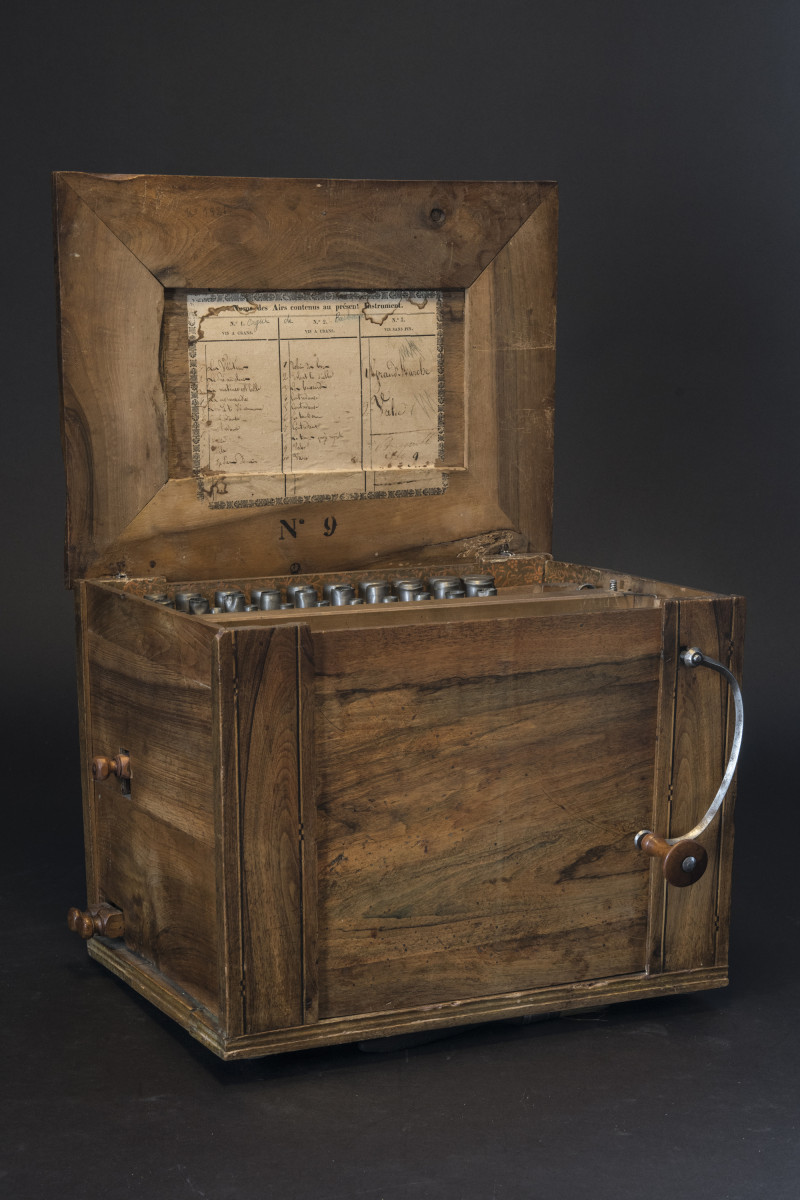
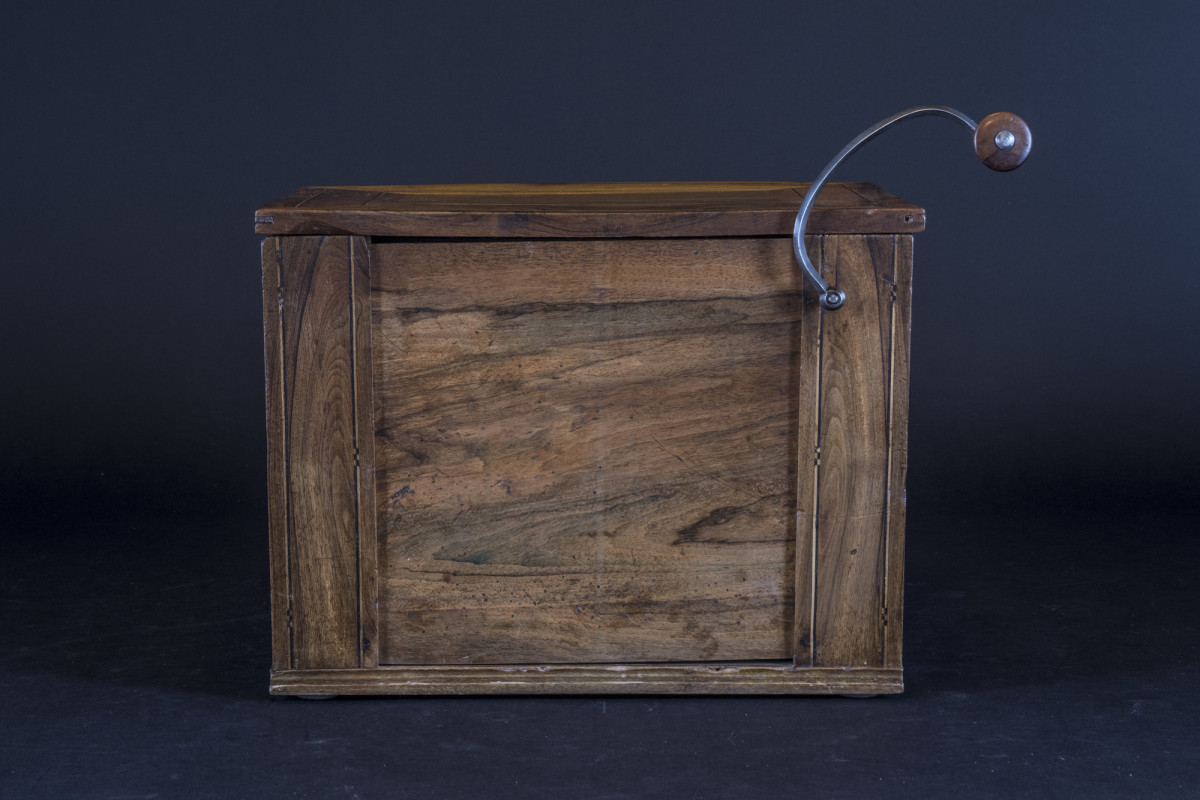
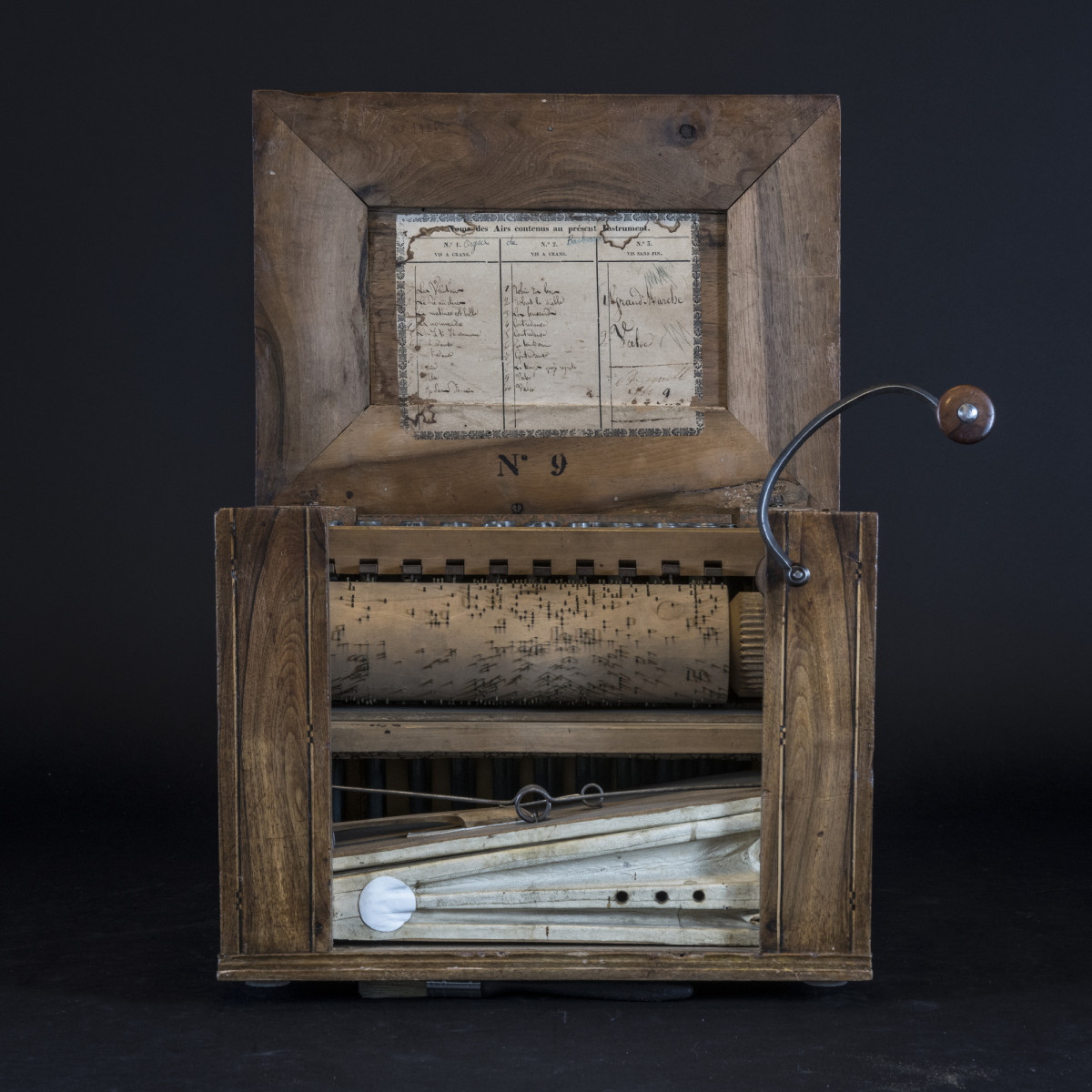
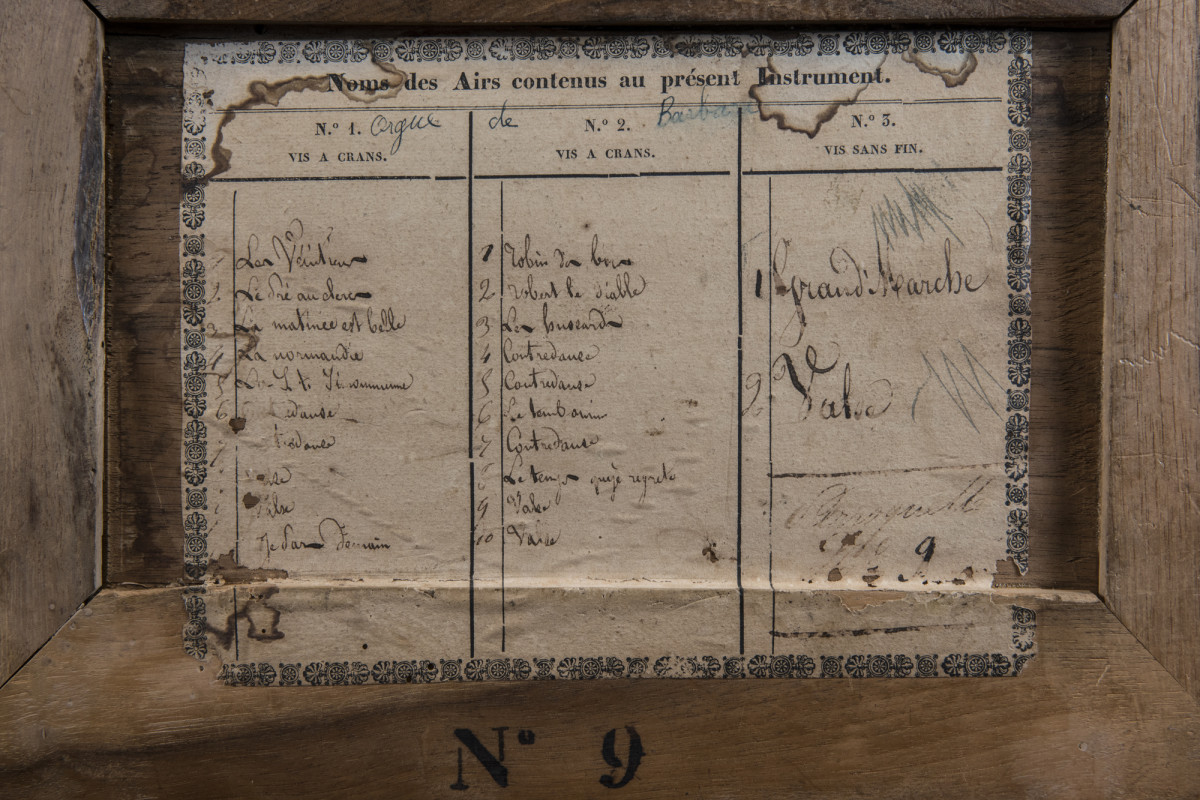
The commonly known name for this type of barrel organ is Serinette, derived from the French word serin, meaning “canary.” Its primary purpose—surprising by today’s standards—was to teach canaries to sing melodies. Despite this, people quickly grew fond of it, and by the early 18th century, it had spread from eastern France to other regions.
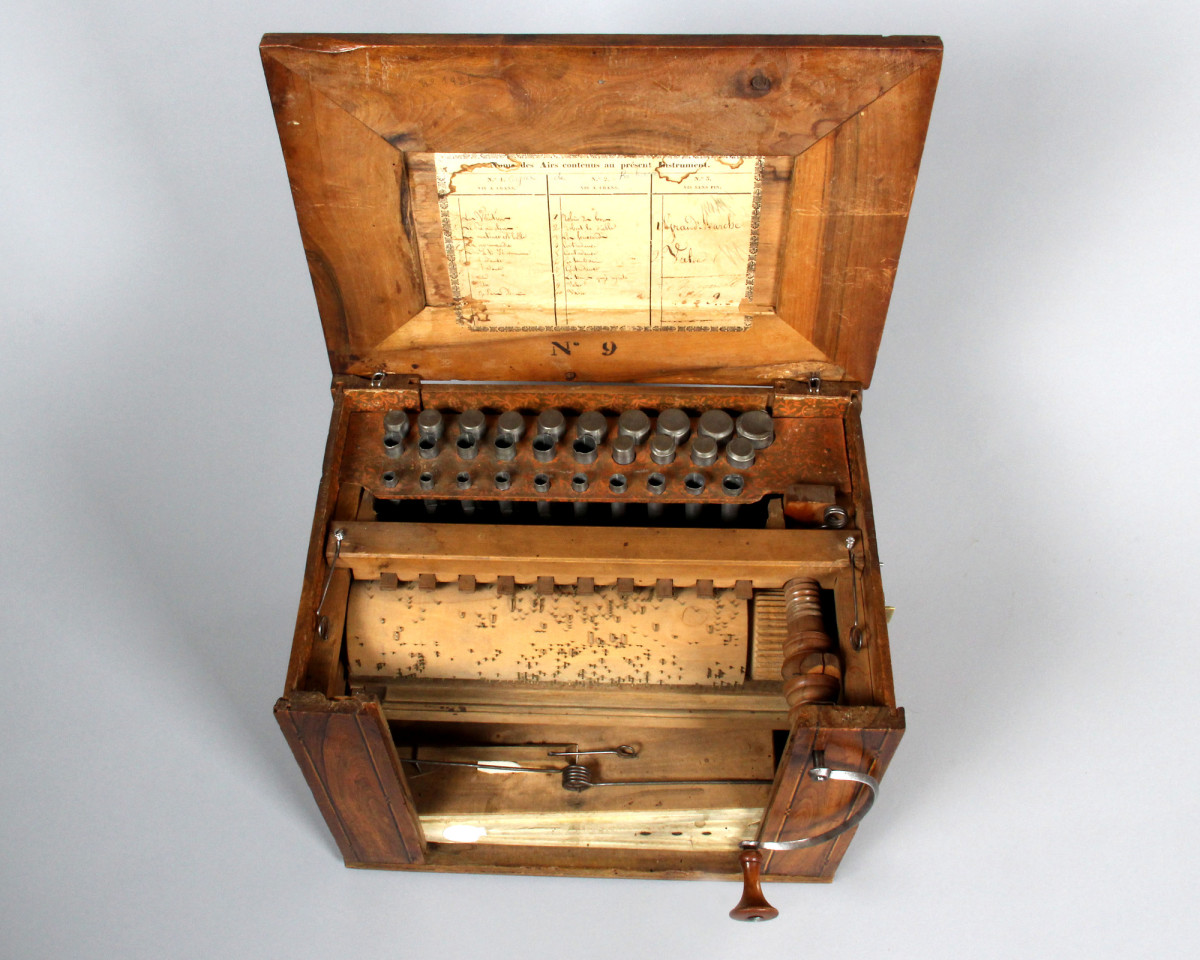
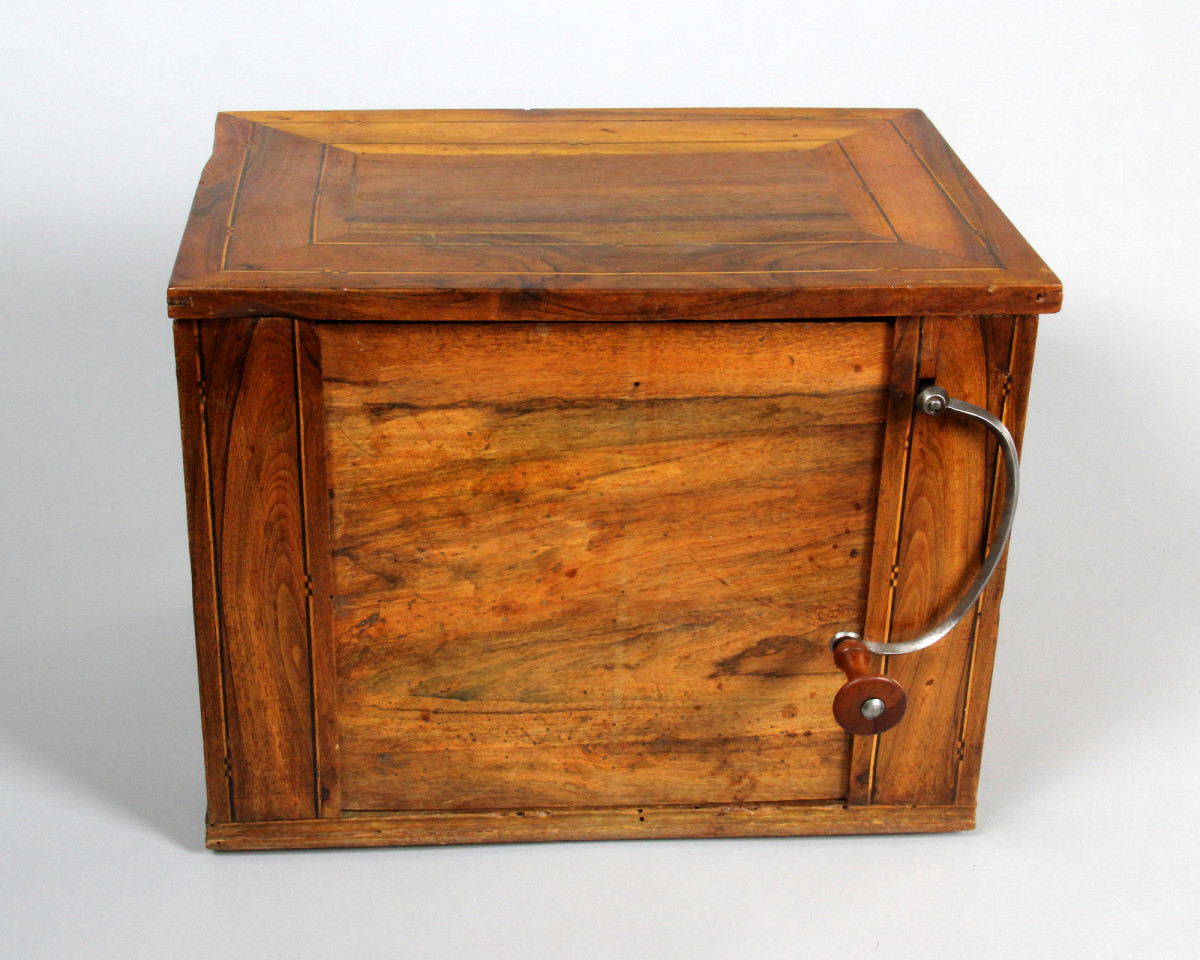
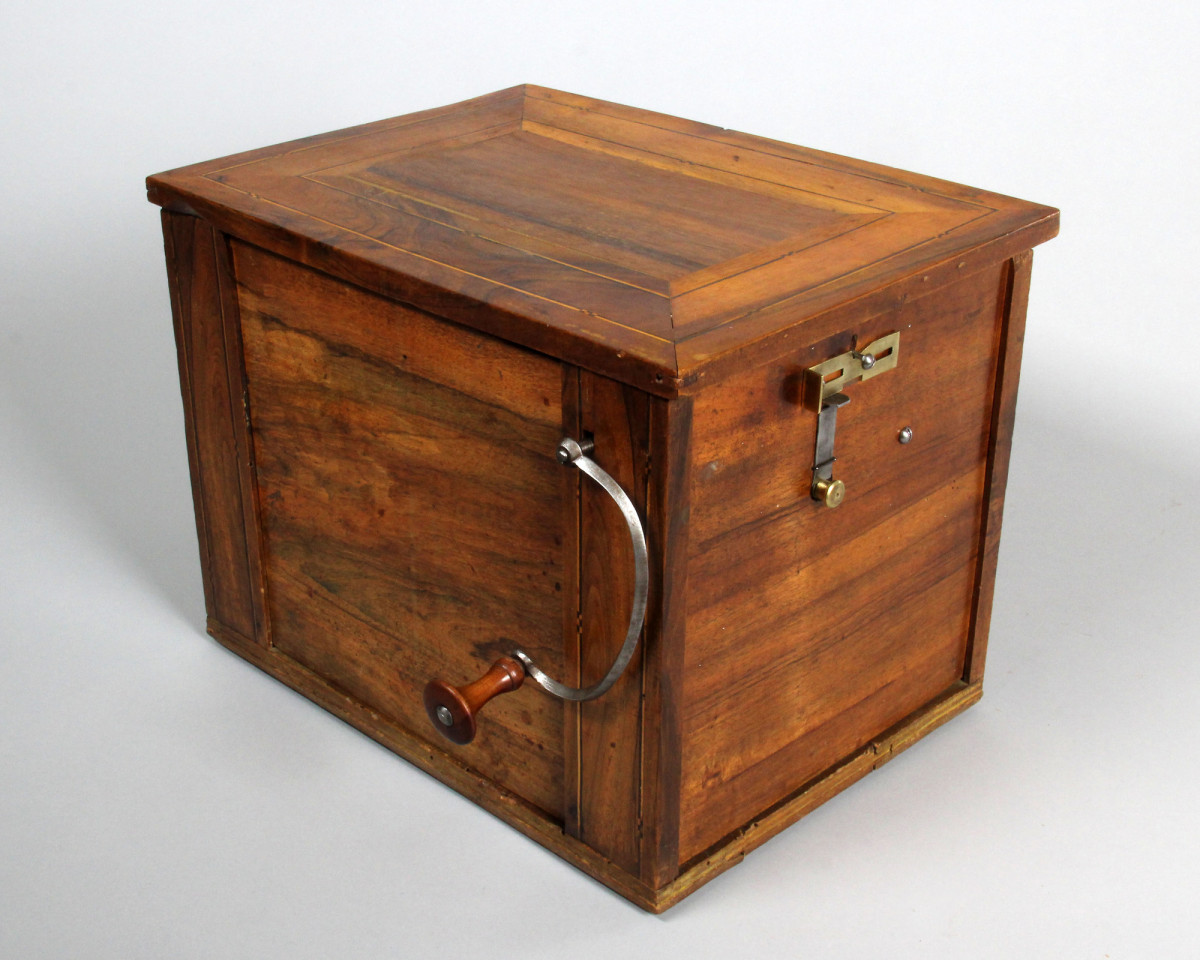
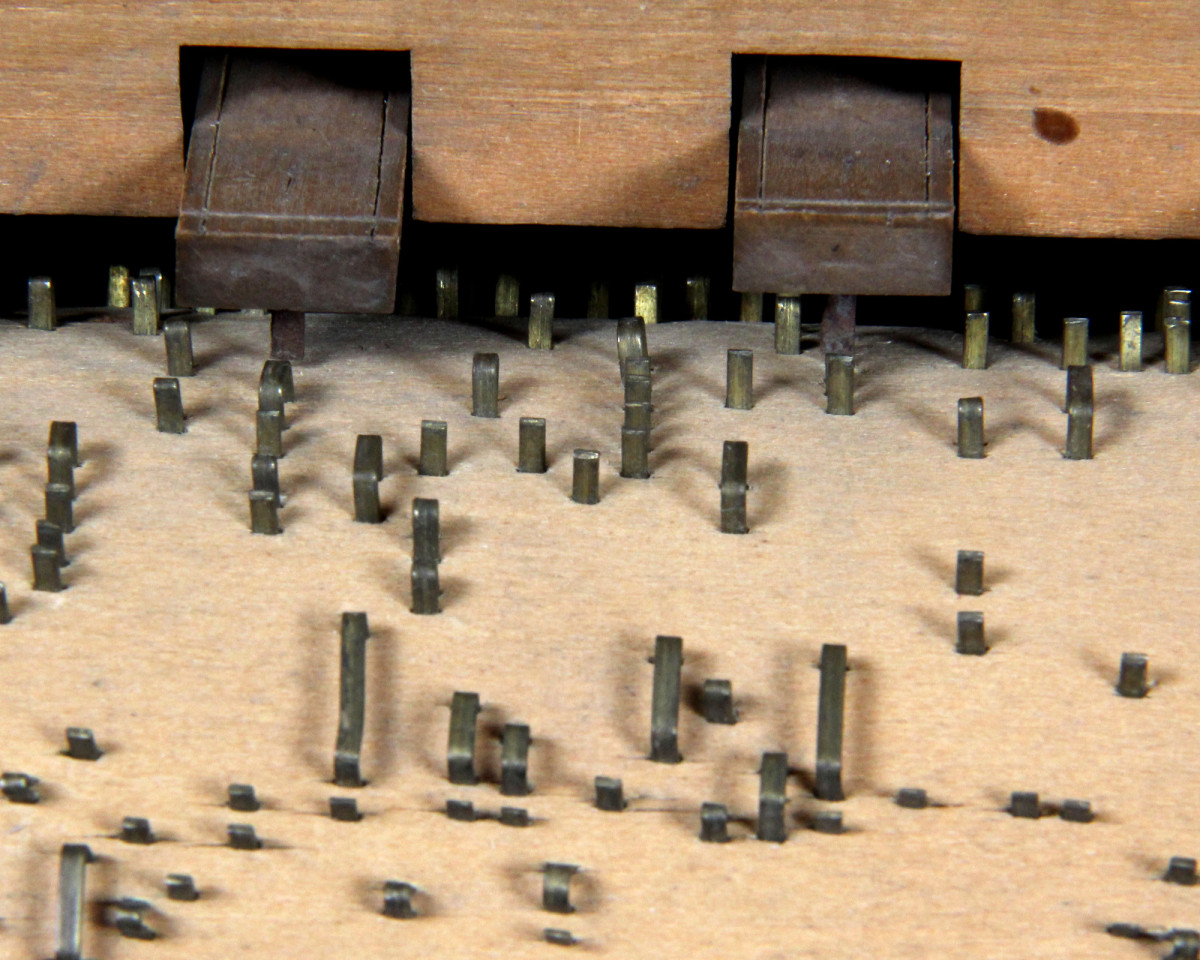
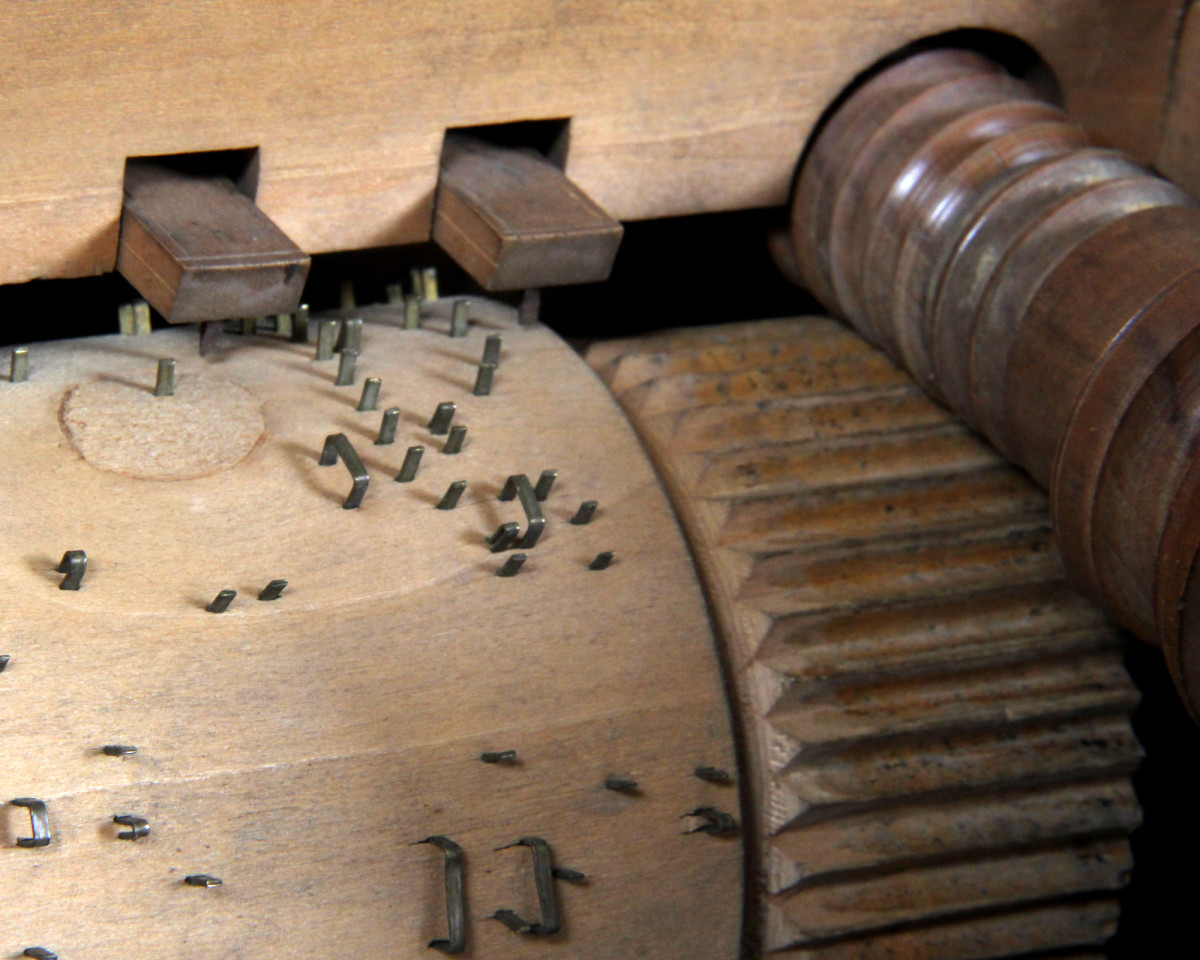
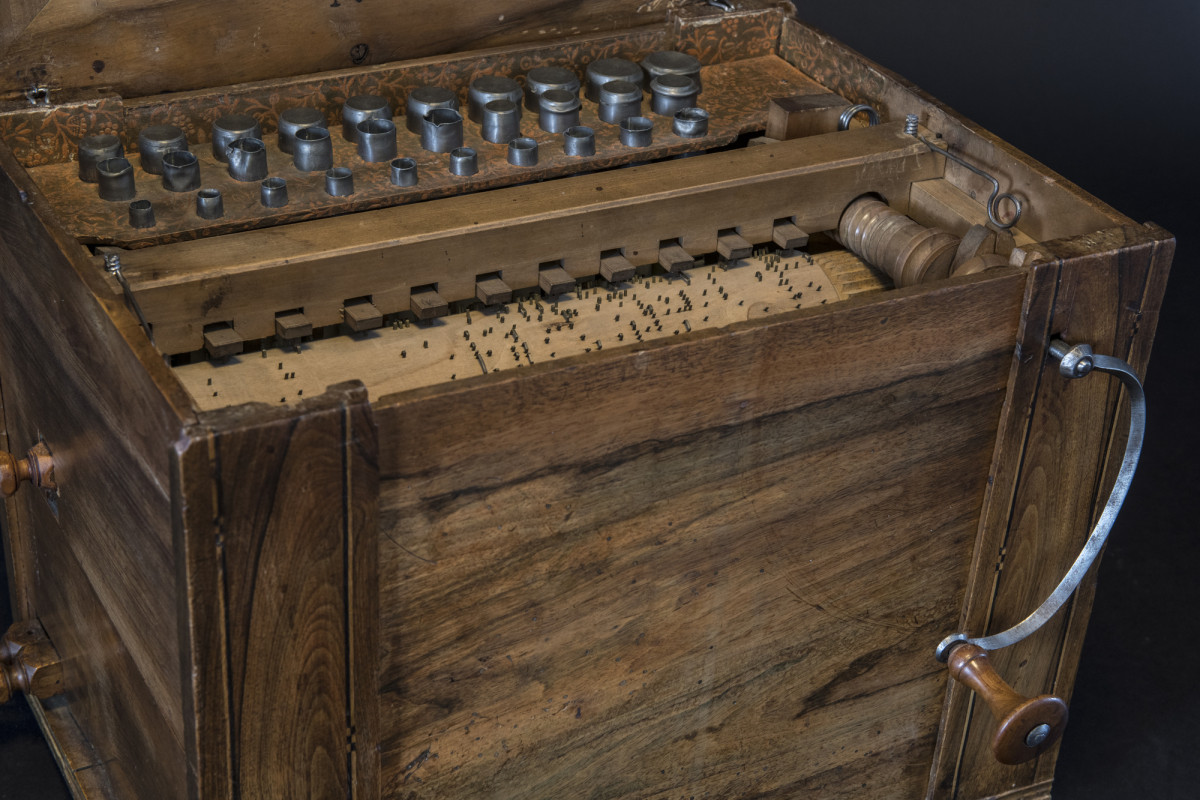
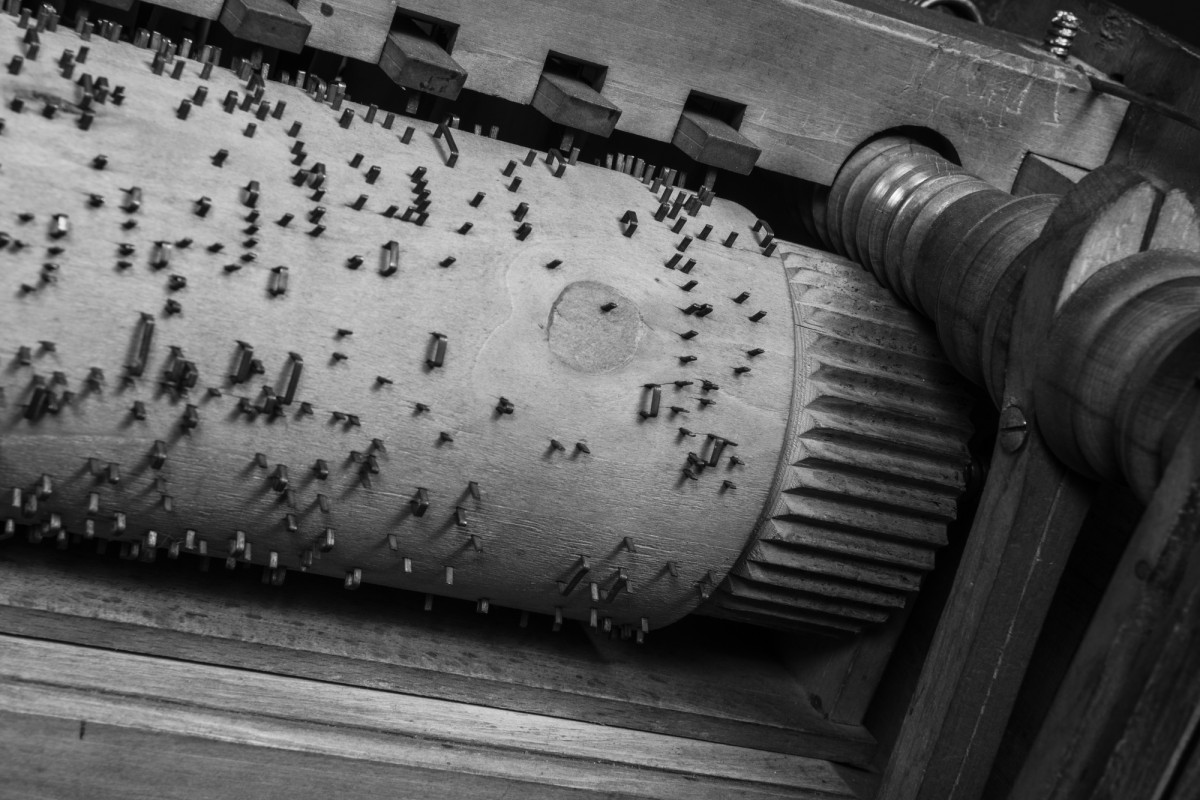
The instrument is housed in a wooden case, typically made of walnut. Essentially, it functions as a miniature organ with small pipes, operated by a hand-cranked mechanism. Turning the crank activates a bellows that pushes air into the metal pipes, while a rotating cylinder with brass pins opens the corresponding air passages, allowing the pipes to produce both melody and harmony in a bright, high-pitched tone, similar to a piccolo.
For decades, the craftsmanship of these instruments remained remarkably consistent—versions made by different artisans were nearly identical, demonstrating the enduring tradition of serinette-making.