
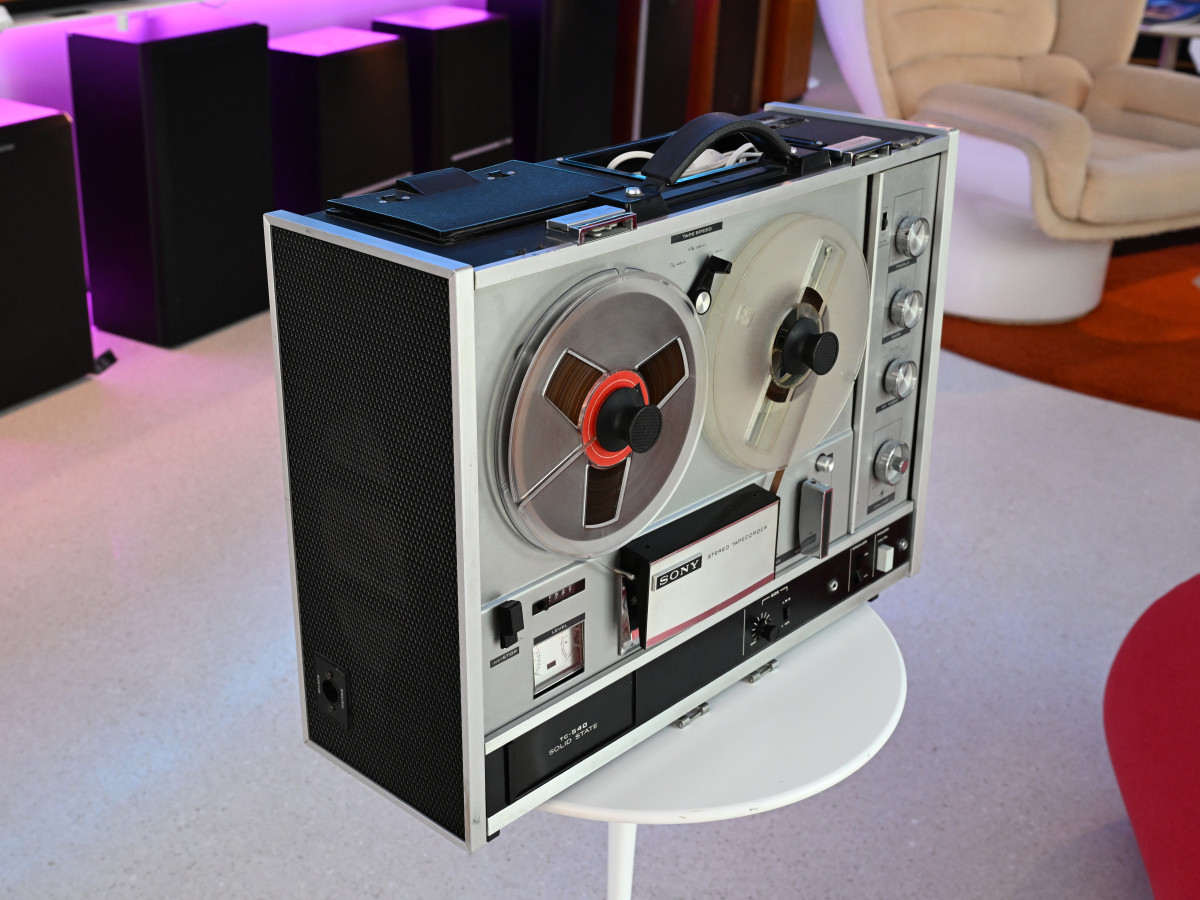
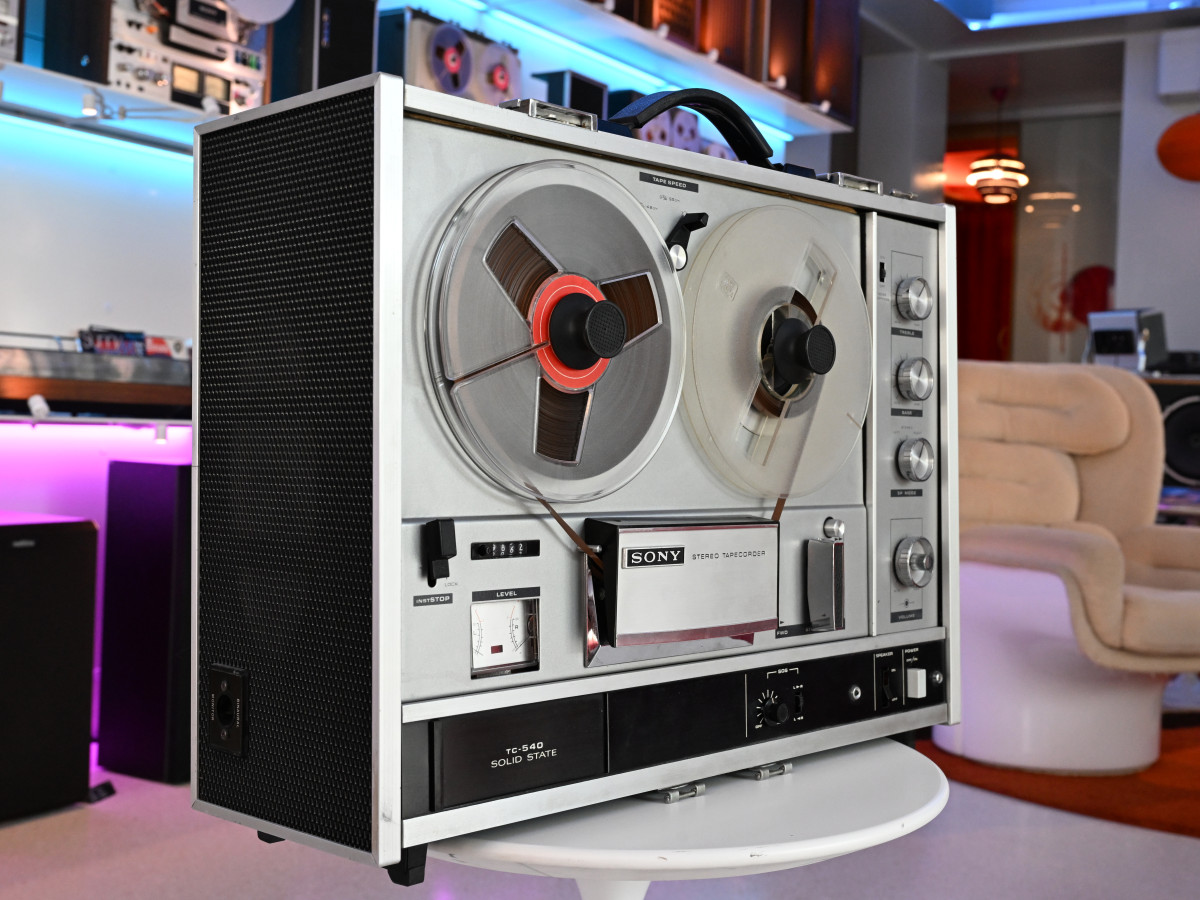
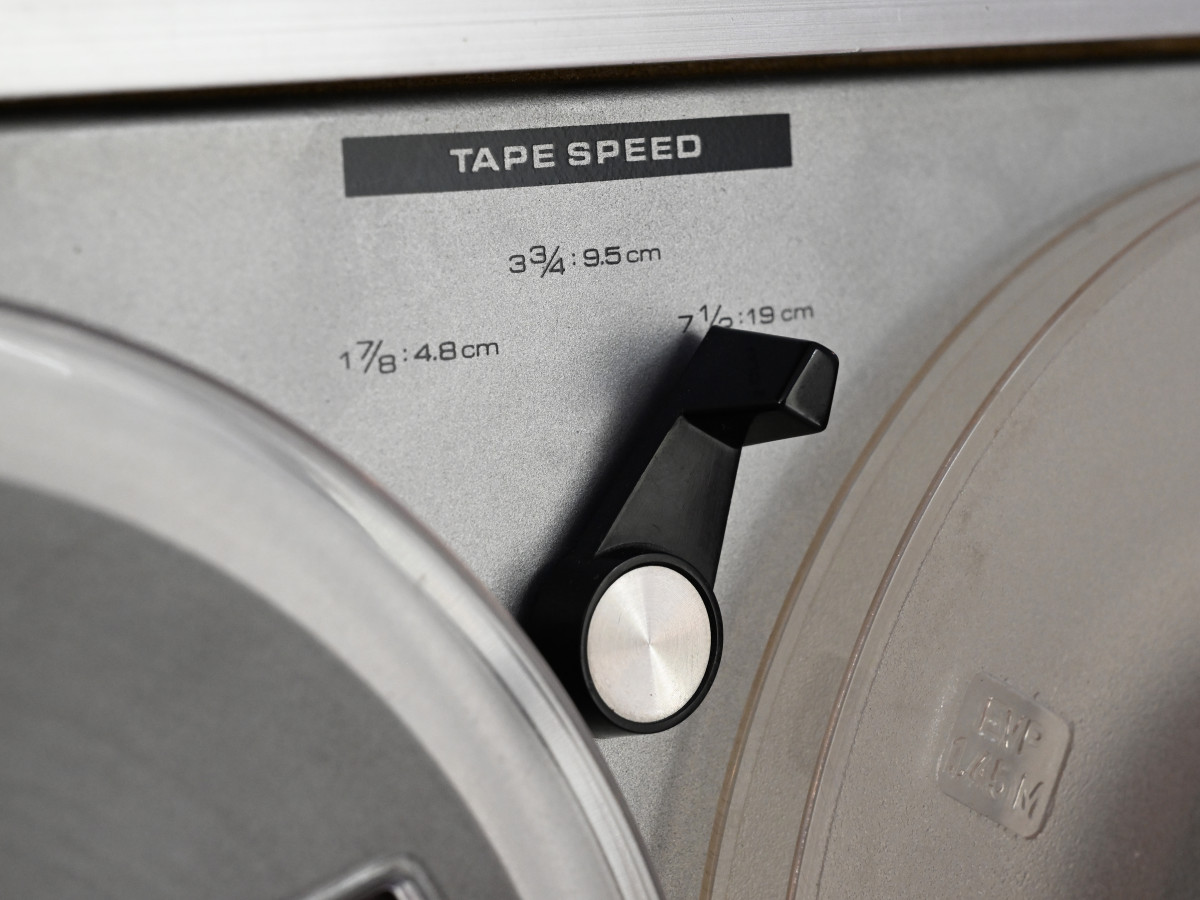
At the turn of the 1960s and 1970s, home audio was gradually becoming an experience, not just a common consumer item. The Sony TC-540 tape recorder, manufactured in Japan precisely during this period, was designed as a compact stereo recorder with quarter-track recording, three speeds, and two heads made of permalloy alloy. But what set it apart was its unique design: four speakers – two bass speakers built into the sides and two treble speakers hidden in the removable lid. It was as if a DJ arrived with a music suitcase that, when opened, turned into a small concert hall.
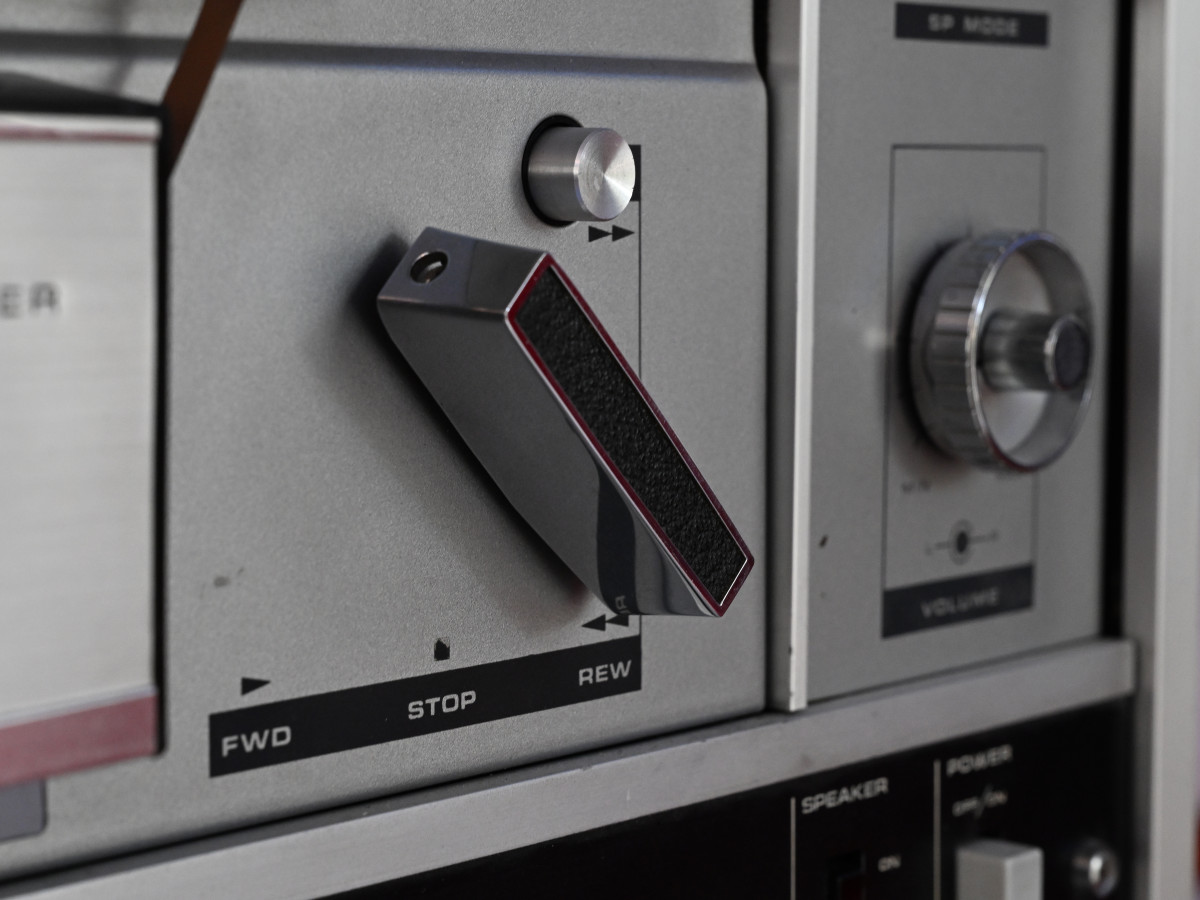
The device offered functions such as sound-on-sound (a technique that allows for gradual layering of audio tracks without the need for multitrack recording), flutter filter (used to suppress slight speed fluctuations of the tape that cause unwanted sound vibrations – so-called flutter), vertical and horizontal operation, and so-called "inching" – fine tape movement for precise adjustment. With a power output of 20 watts and a frequency range of up to 20 kHz at the highest speed, it was top of the line for home recording in its day.